
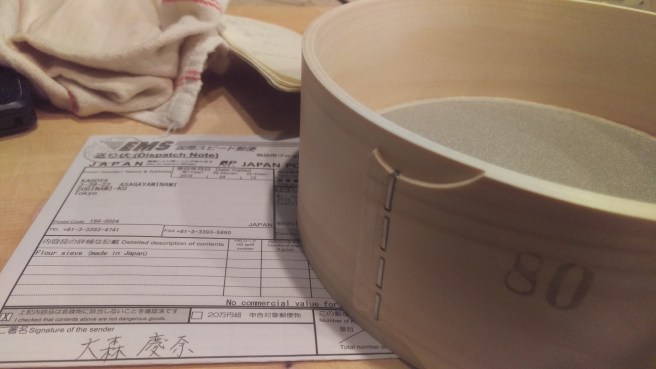
Meet the new edition to my growing flour sifter collection. So far I have only used it once for its intended purpose–buckwheat. That tale of mediocre buckwheat crepes is for another post (coming soon). The short story is that I want to learn how to make proper soba noodles. I figured the best way was to get a traditional Japanese flour sieve. Somewhat surprisingly, I could not find one online in the U.S., so this was shipped from Japan.
Once I get a few attempts at soba with my own fresh milled buckwheat flour under my belt, I will have to order some from Anson Mills Ni-Hachi Sobakoh to compare. As with other flours, Anson Mills seems to be regarded as the best U.S. source of buckwheat flour for soba noodles.
 Despite my appreciation for whole grain (or high extraction almost whole grain), sometimes you really just want some fine white flour. I previously purchased a #50 sifter that I thought would get me close, but it was still only getting me to around a ~75% extraction. The resulting flour was producing more of a whole wheat than white bread. After some research, I realized that I needed to step-up my sifting game. So here it is, an Advantech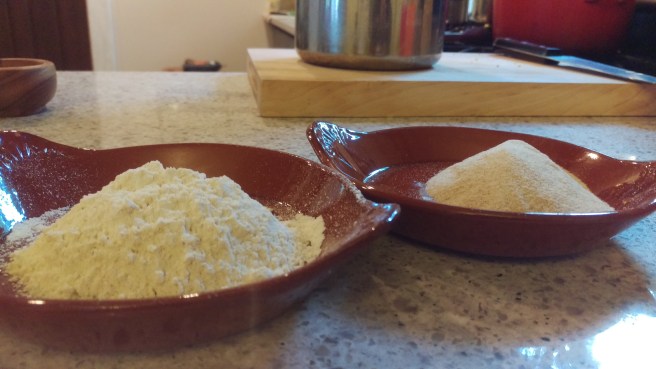
 whole-purpose.com