Adventure no #1 with sleeping baby and Kamut

baby and dog
baby discovers dog, dog indifferent

Now that my daughter is 3 months old and sleeps at night (sometimes at least, so far so good tonight), I have actually found time start experimenting with my new Komo Fidibus Classic grain mill. A month ago, in a spate of arrogance, I decided to prepare a rich slow cooked ancho chile sauce and cook my wife and I a nice plate of chicken enchiladas. My mistake, babies don’t care about enchiladas. They were still good, but eating hastily prepared cold food after hours of prep work was disheartening.

So I waited.

Oh, I also unceremoniously threw out (i.e. composted) my starter culture weeks ago. It seemed like such a small weekly task to remove it from the fridge, feed it, and change to a new jar, but after missing two weeks in a row I knew it was hopeless.
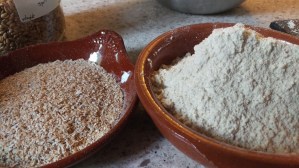
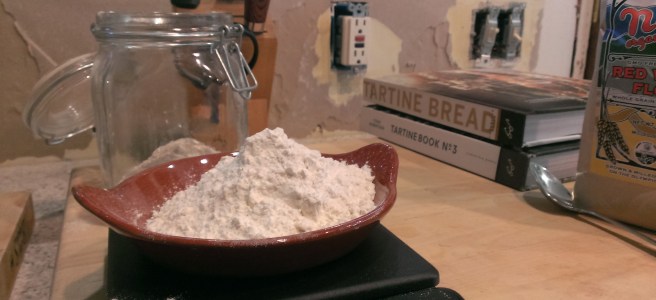
KoMo ClassicWhich gets me to last weekend.  I had a jar of Kamut berries sitting around and I have been meaning to try again at a 100% Kamut loaf. I milled the berries into a very fine granular texture. As a durum wheat, however, Kamut doesn’t mill to a nice floury powder, but more of a meal type texture.  I milled a total of 500 grams, sifting off 20 grams of bran.

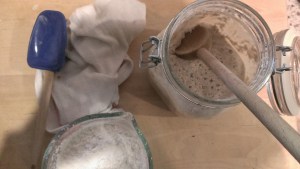
I took 50 grams of the Kamut flour, and a dash too much of commercial yeast, and added 60 grams water to create a poolish, which I left on the counter for a couple hours to find overflowing (not a very smart choice of container). I feed the poolish with 20 more grams of flour and 20 grams water and refrigerated it overnight, as I decided to bake the next day instead. Kamut is total water hog and just eats up water, which lead me to add the bit of extra water above the 100% ratio for a typical poolish.

For my bread, I used 100 grams Kamut flour and 80 grams water, 3 grams of commercial yeast, and 3 grams salt (I forget the exact type, but I think it is from somewhere in Utah).

Totals (including the 100 grams of poolish):
Kamut: 150 grams 100%
Water: 130 grams 86% (a little too much, I would have gone with a little less)
Dry Active Yeast: 2 grams   1%
Salt: 3 grams 2%
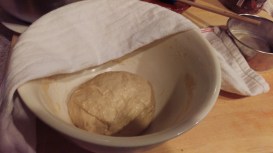
Kamut ready for bulk rise
about to bulk

Autolyse for 15 mins, added salt with a little extra warm water, gave it some nice folds and left to bulk rise for 4 hours. I then gave the dough some additional folds and shaped into a narrow baguette.

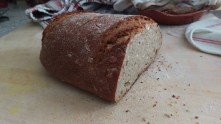
I let the loaf proof for an hour (not long enough, but it was getting late), got my oven up to 500 degrees with my steaming pans of water, burning off oldbagette 1 residue and setting off the smoke detector in the process of course. Fifteen mins at 475 degrees, followed by another 15 at 450 and I had a decent looking baguette. Buttered and jammed, it tasted quite good. Although after two different Kamut based loafs, I have decided the flavor just isn’t great for straight breads. It is too strong and too “a flavor I just can’t quite translate to words”. Again, as with spelt, people often describe the flavor as nutty, or buttery, either of which I don’t think is right (still trying to come up with a better way to describe the various flavors of different grains).
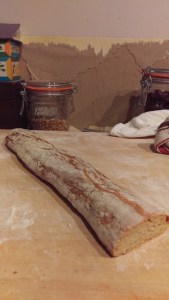
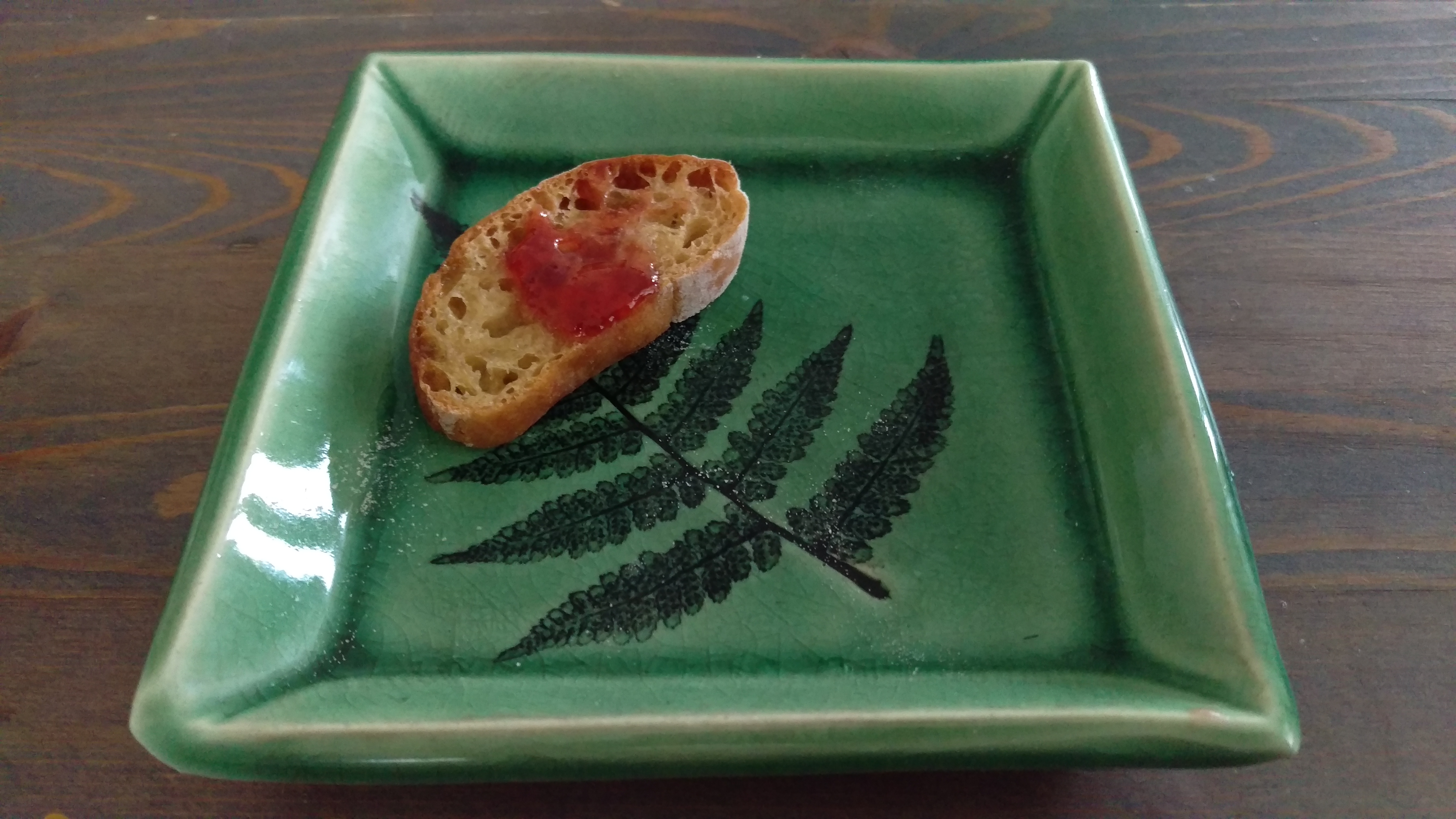
bread with butter and jam
the last piece of toast

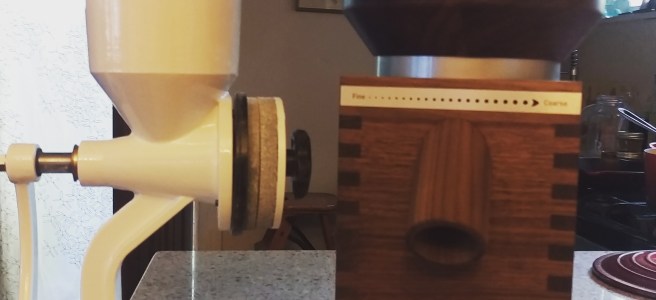
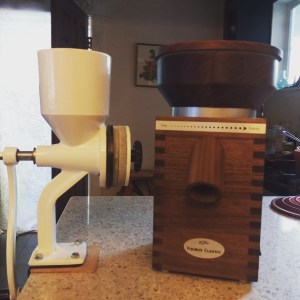
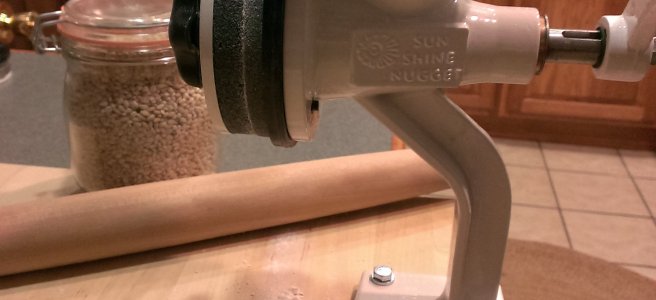
Old mill meet the new mill

It really wasn’t practical to hand crank enough flour for cooking and baking on demand with the Sunshine Nugget mill. Especially that time is pretty hard to come by in my house these days, what with a baby hanging out all day. At least this was my rational justification for picking up a KoMo Grain Mill, ordered from Pleasant Hill Grain. (I also had the fortitude to resist buying a vintage Miyata One Thousand that was offered to me for a great price, so I figured I deserved it.)

Between the baby and my day job, however, the KoMo sat there tempting me over a week before I had time to actually put it to productive use. Test batches resulted in a nice soft flour, but I tossed them as part of the breaking in process (per manufacturer’s instructions).  It is a beautiful looking machine.

The Sunshine Nugget will still stay around though. I plan I will keep it latched to counter with the steel burrs to grind seeds and other wet grindable products that can’t go in the KoMo.

old mill new mill
mill envy

two failures and one spelt loaf later

The first bread I attempted with my natural yeast starter using the Tartine method was such a failure it almost made me give up and decide to stick to my forte of glorified pencil pushing. Maybe good bread is just beyond my reach. It may still be, but after the first disastrous failure and one brick later, I managed to create an edible loaf of bread.

Brick bread (see right):brick bread

Spelt Bread 

After playing around with sprouting spelt berries, I started to develop an affinity for its off-beat wheatiness, which is often described as nutty (although I am not convinced that is the best description) with a moderately sweet flavor. My selection of spelt was store bought bulk Vita-spelt berries, which I stone ground with my Sunshine Nugget. I set the mill to a slightly courser grind than I have in previous batches. I sifted off about 15% bran by weight. The bran was heavy and noticeably larger than bran sifted off in my batches of fresh milled emmer and hard red wheat

spelt bran extractionSide note on bran.

Bran is tasty stuff, but true whole grain bread is just too heavy for my taste. I tried to use the bran to mixed results (e.g. a bran cracker that will never be spoken of again).

Recipe: 170g spelt flour, 40g leaven (50/50 all-purpose/rye flour mix), and 110g water. Autolyse for 1:30 (longer than normal because I had errands to run), then mixed in a tps. salt with a little extra water and gently folded for a couple minutes and left to rise for 3 1/2 hours. After a decent rise, I cut off one-third the dough to use for flat bread with dinner and folded the remaining dough into loaf shape and refrigerated overnight. The next morning I brought the dough back out onto the counter and let it sit for hours (basically all day). After almost forgetting about the bread (according to my Tartine Book No. 3 spelt has a very long rising time, which I did not know at the time), I folded the dough once again into better mini-loaf shape and pre-heated the over to 400 for baking. Lacking a steam injection oven or a proper cast iron covered pot, my work-around is just a pan of water plus water on the bottom of the oven to create a nice spa like atmosphere.

The end result: Nothing special, but not bad. A nice sourdough tang and not too wheaty. Still too dense with too tight a crumb though.  spelt bread

Starting a Starter: It’s Alive!

I recently decided that it was time to start maintaining a starter to make breads. (Full disclosure: I am not a great bread maker but trying to get better). In the past, I have always just used commercial yeast and didn’t really consider natural leavening. As my wife knows, I don’t like doing anything the easy way, so enough with the little packets of yeast. Overall, there were some ups and downs over the past two weeks, but I think I finally managed to get a healthy and strong culture going.

culture day 2

My flour mixture started as a 50/50 whole wheat/all-purpose blend, which initially took off. See photo to the right two days after starting. However, my wife was not a fan of the smell. She barely tolerates my various messes in the kitchen as is and I got a little worried that this might put her over the edge.

After this easy start, the activity really seemed to die down and the mixture was mostly just like pancake batter. Although the weather had turned colder (my kitchen was at around 65F most of the time), I decided the problem may have been chlorine in the water. I kept a couple tablespoons of the old half-dead starter and boiled some water to get rid of any chlorine.

boiled water half gallon

I created a little system to boil water and keep adding it to this old half-gallon jug that I bought years ago and until now had never found a use for.

Based on some reading online, I also switched to a 50/50 all-purpose / rye flour blend. Not a great idea to change two different variables at the same time, but it worked. The starter really took off after another 2 days, two feeding cycles. The culture seemed strong enough and decided it was time to try to make some actual bread. (For another post).

My culture after 2 weeks (with a couple days of serious neglect here and there). I fed the culture about 3 hours before this photo. The starter had roughly doubled in volume and obtained a fairly gentle sweet smell. My wife hasn’t complained about the smell in days!

sweet smelling starter

Ancient Grains

A great summary of ancient grains. Next on the list to try Einkorn.

ANCIENT GRAIN: EINKORN

Einkorn was included under “Farro” as “farro piccolo” on the first post of this series, but it deserves its own since it’s regarded as the most ancient wheat and among the first grains domesticated by early farmers, round 10,000 years ago in southeast Turkey; wild einkorn was harvested as early as ~15,000 BCE.

http://sanjuancoop.org/news/all-you-ever-wanted-to-know-about-ancient-grains/

I think there needs to be map of grain regions and varieties in the Pacific Northwest.

Grain is not the water: The Grain Divide Documentary

About a year ago, I became convinced that grain was being woefully neglected in the local and artisanal food movement. Maybe it was just bad timing, in that the the food movement really took off at the same time that anti-carb/gluten sentiment became the new fashionable dietary dogma. It could also be that grain lacks the romance of other food stuffs (like artisanal cheeses and pickles) and is simply overlooked, as if it were the water of food.  Sad to see this vital and ancient part of human civilization diminished to all-purpose mendacity. Needless to say, I was happy to find The Grain Divide documentary (not yet out) today. Can’t wait to see the whole documentary.

https://vimeo.com/109886086

There is an extended preview on the The Grain Divide website.

Pie Day

My wife was invited to a pie day party on Saturday (3.14.15) and was required to bring a pie. Unfortunately, she has gestational diabetes and there is to be no sweet pie for her. Instead she decided to bring a quiche and I agreed to make her a whole grain crust.

For the crust, I wanted something hearty and decided to make a blend of 50/50 hard red wheat from the Upper Methow Valley, WA (I believe from Bluebird Grain Farms) and soft white wheat (no clear origin other than somewhere in the USA).

This would be the first time using my brand new Sunshine Nugget stone mill and, although my kitchen is a disaster at the moment, 2015-03-14 13.40.08the milling process was relatively smooth and it was easy to get a fine and even consistency. There is more grain at then end that doesn’t get pushed through the millstones than I thought. I ran the flour through the mill again, but it wasn’t necessary. This was going to be a whole grain crust, but I decided to pull a little of the bran out. This is for a pie crust after all.

I was so focused on the bran sifting and weighing that I neglected to get a photo of the actual milled flour (not a great start to this blog). removed bran

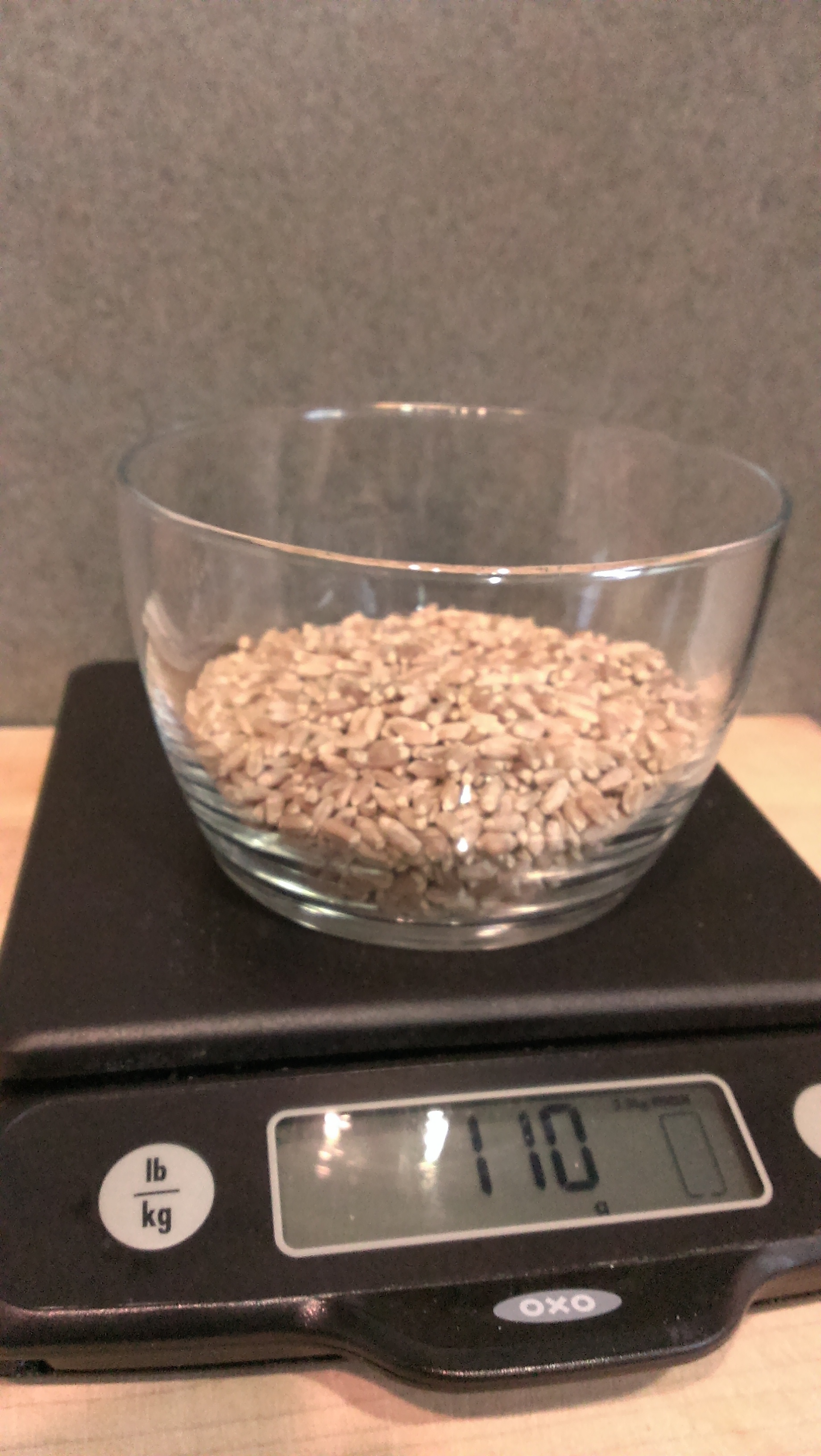
Here is the bran I removed, with some cracked grain berries (the grains that didn’t get pushed through the millstones completely). By weighing both, the end product was approximately a 90% extraction flour (actually a little higher because of those cracked grains).

Crust recipe: 200g of the 50/50 hard red/soft white wheat blend. 53% (105g) butter. (Butter is from Bob’s Quality Meats, who gets its from a local producer, I will have to find out exactly what farm next time). I added a pinch of salt and mustard powder. Not sure what the mustard powder is for, but my Pie cookbook recommend it for a whole grain pie crust, will have to look into that as well.

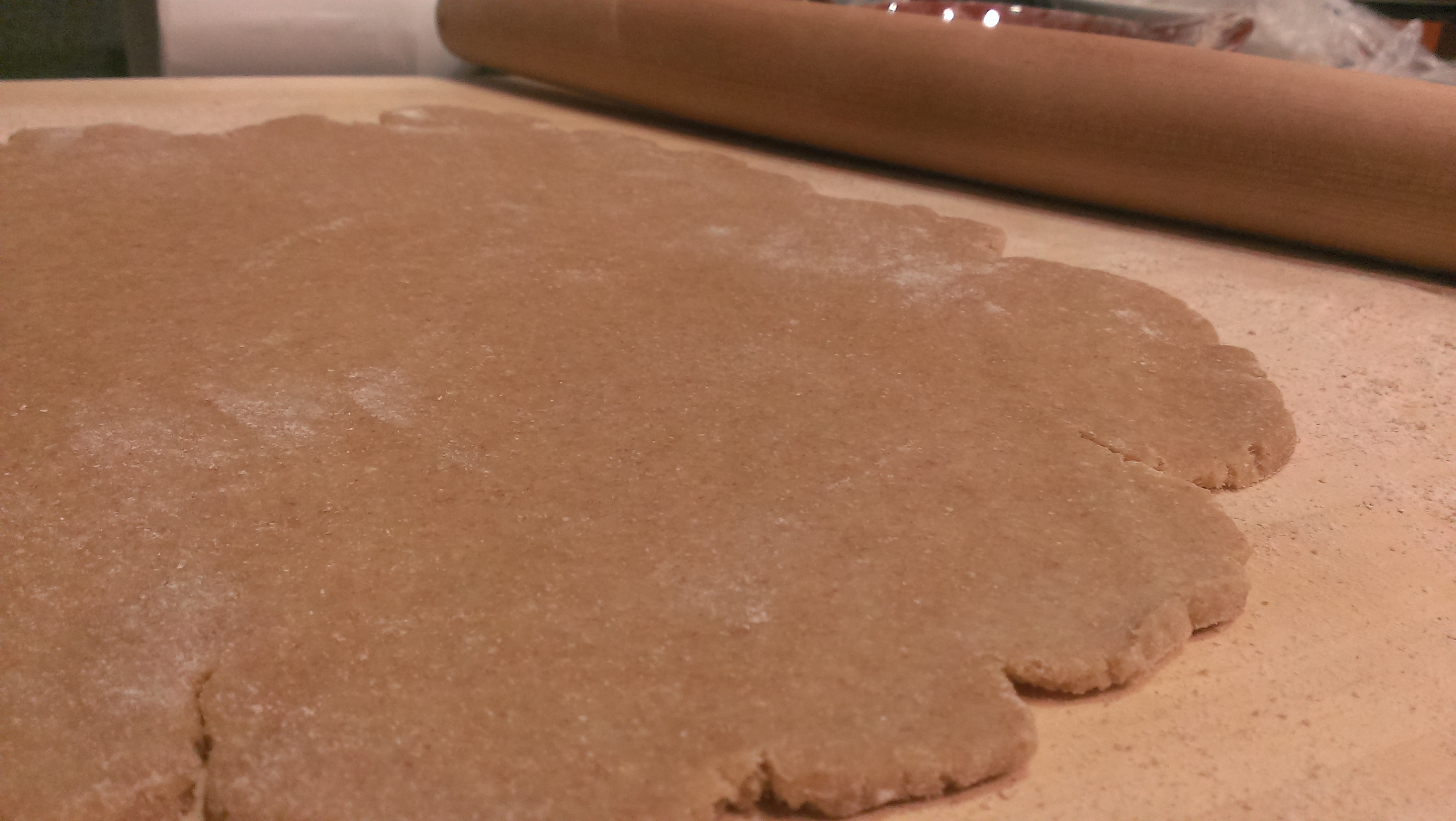
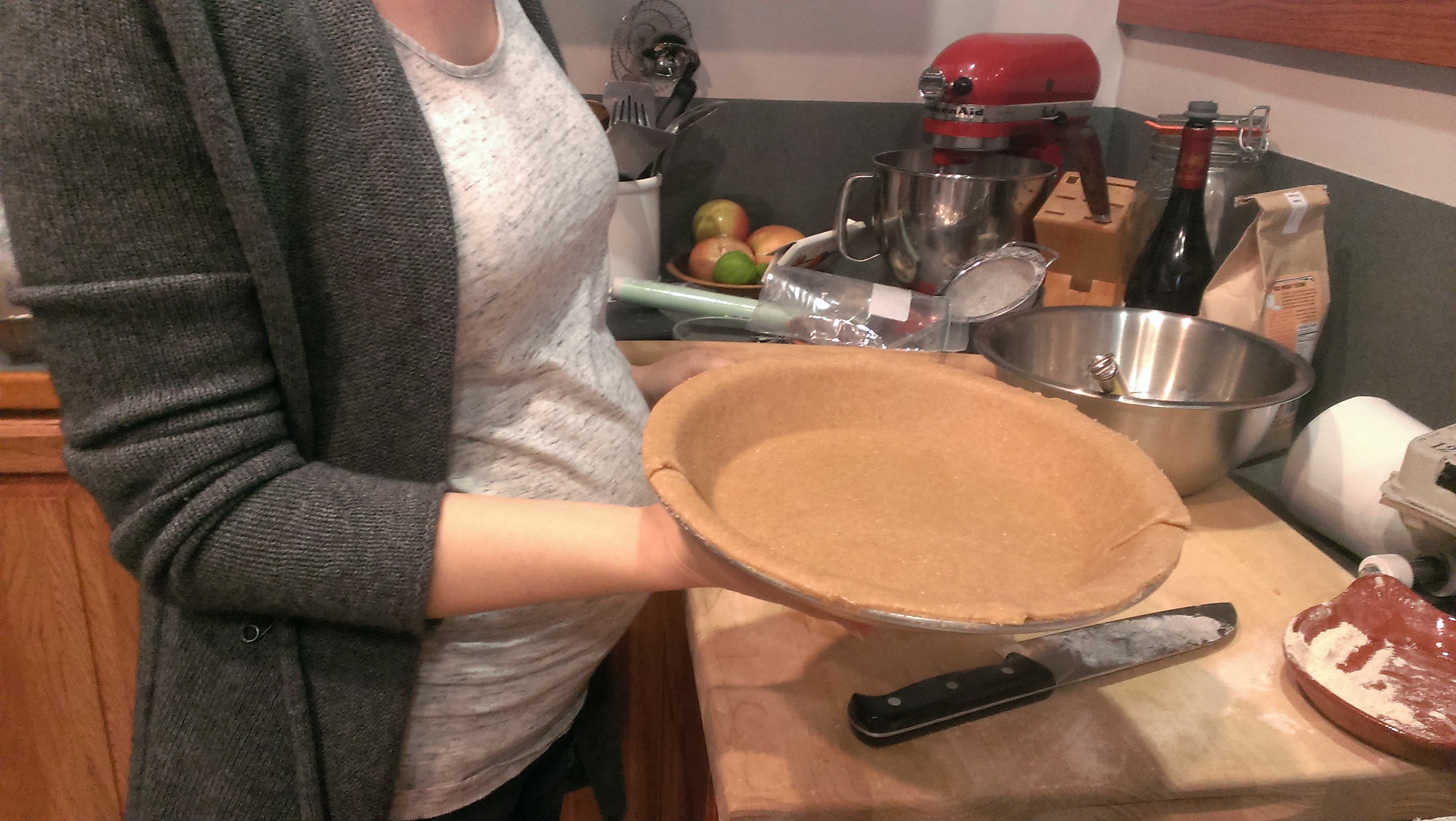
This is the eventual crust:

rolled dough

wife with pie crust
wife with pie crust

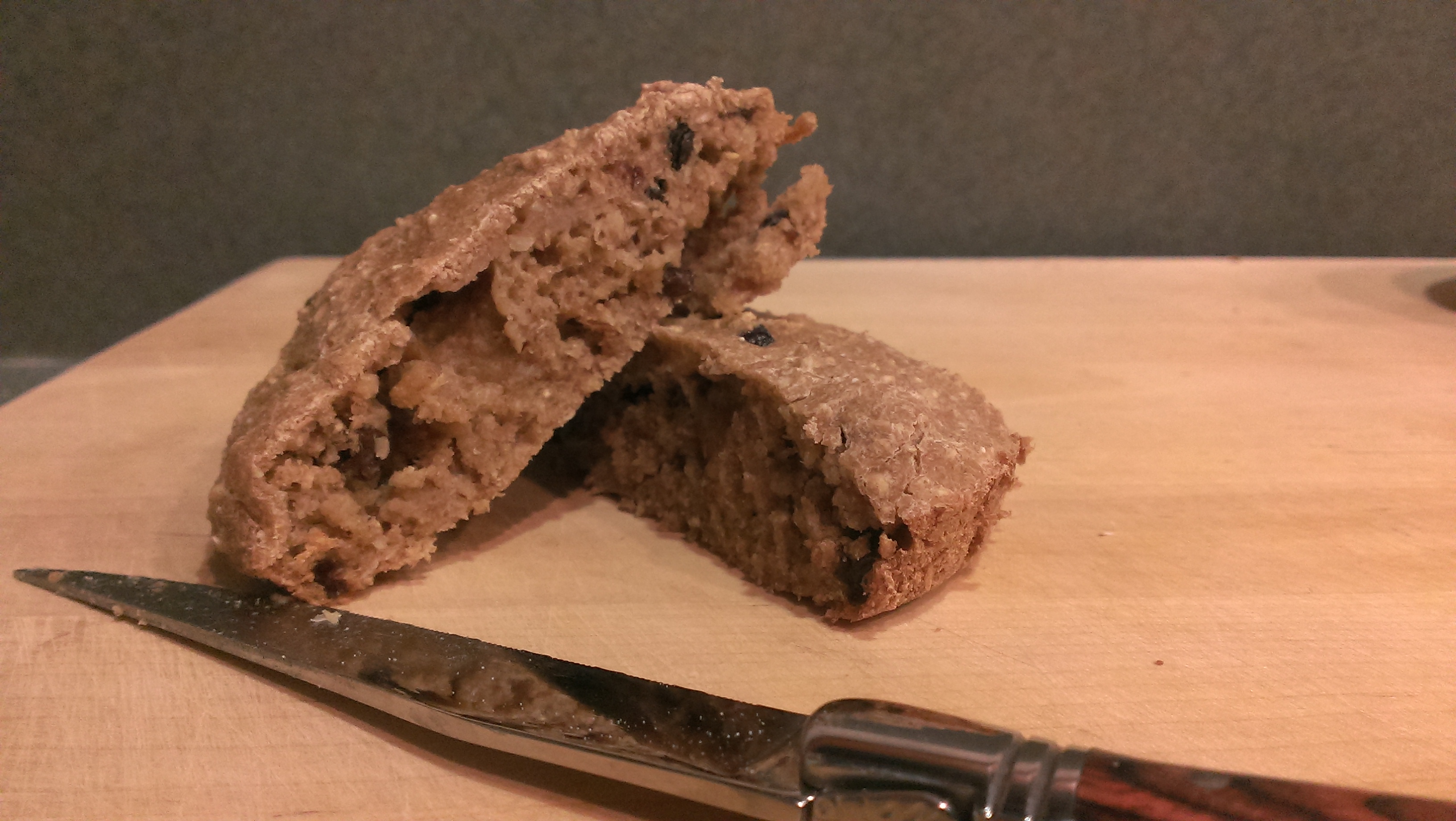
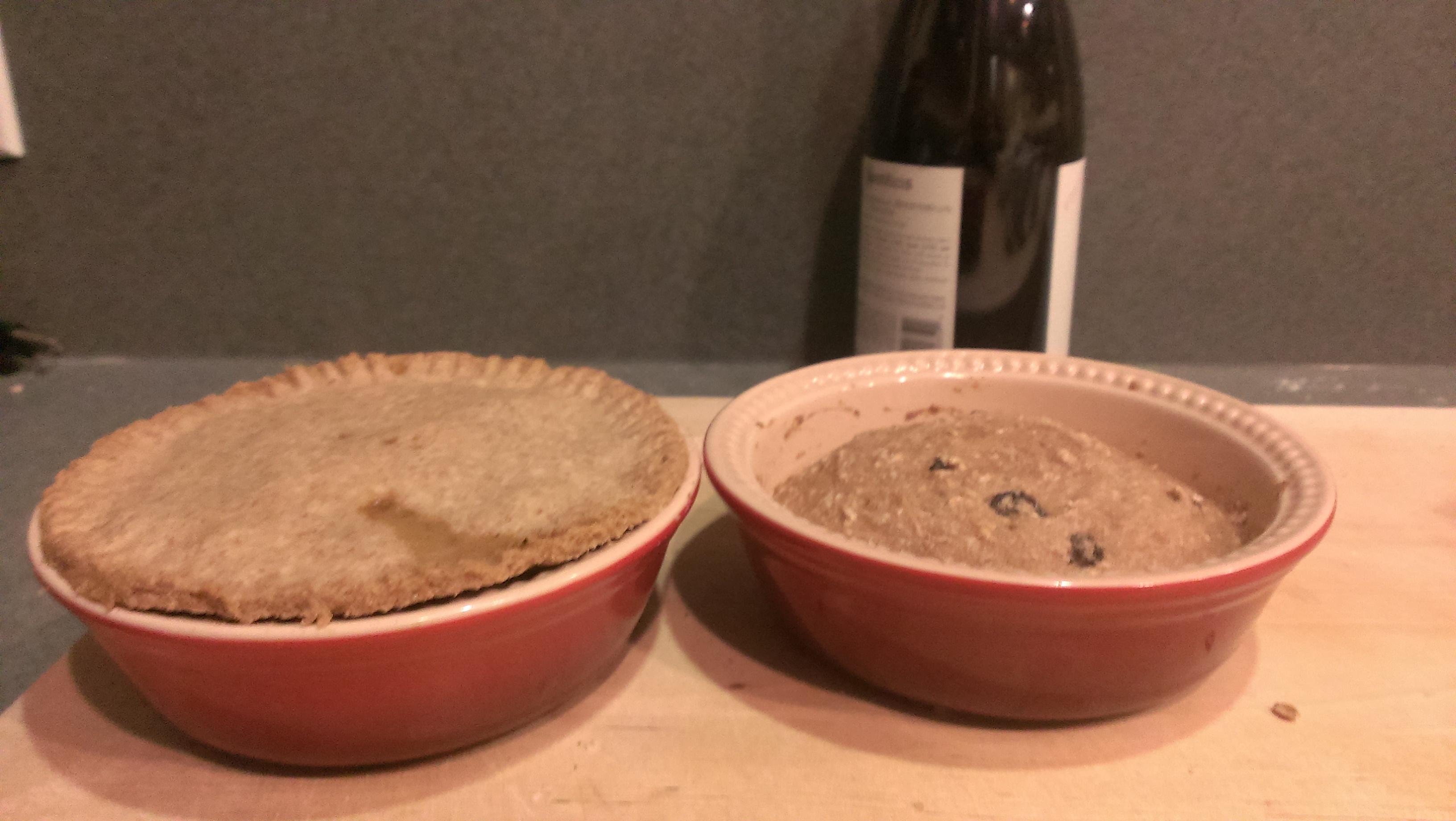
Pie crust done, quiche baking, and I realized my wife was leaving with the quiche, so I needed something to eat myself. I love savory pies and have been making my own pot pies for years, so rolled out some more dough for quick mini chicken pot pie. The bran (a scant 20g) was just asking to be made into a bread. I added some hard red wheat flour to the bran, mixed in a handful of currents and a teaspoon of sugar. I proofed a little yeast (which didn’t proof well), but went with it anyway. Let it rest to rise, although the rise was weak as I knew it would be, just didn’t have time to correct course. Baked both at 350F for 30 mins or so, until they looked done. Pot pie was delicious (filling was leftover chicken and roasted root vegetables, chopped up and simmered in water, white wine, and a splash of sherry vinegar, tarragon, mustard, and thickened with butter and flour). Bran bread was not bad (not excellent, but enjoyable).

bran bread crumb #1 pie and bran bread

Full disclosure: For the dusting, thickening, and the bran bread I used a hard red wheat flour from Nash’s Organic Produce grown and milled in the Sequim-Dungeness Valley by Delta Farm.

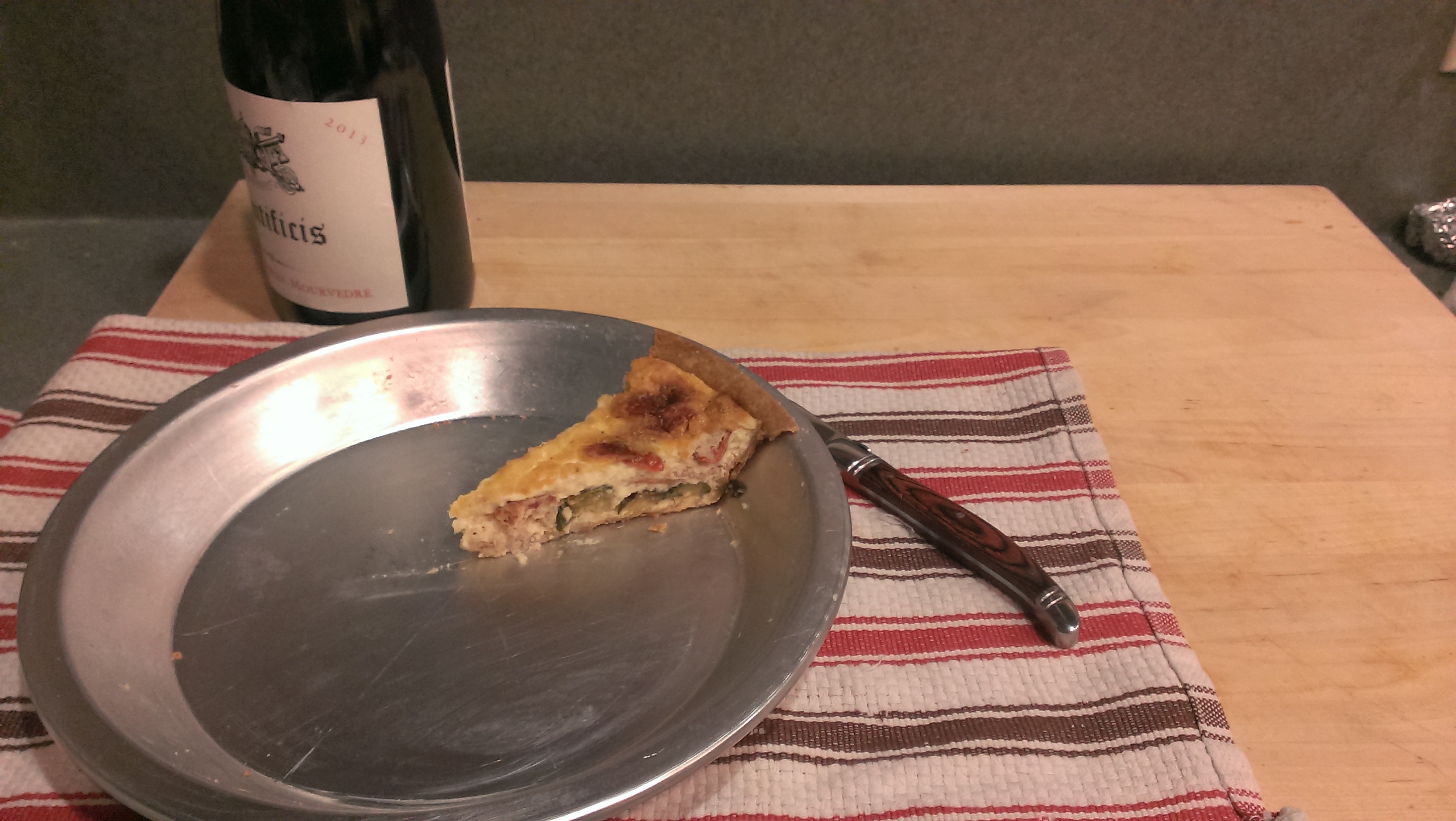
Then my wife came home and had saved me a piece of quiche. She won best savory pie at the party.

quiche_saved piece for me

My Sunshine Nugget

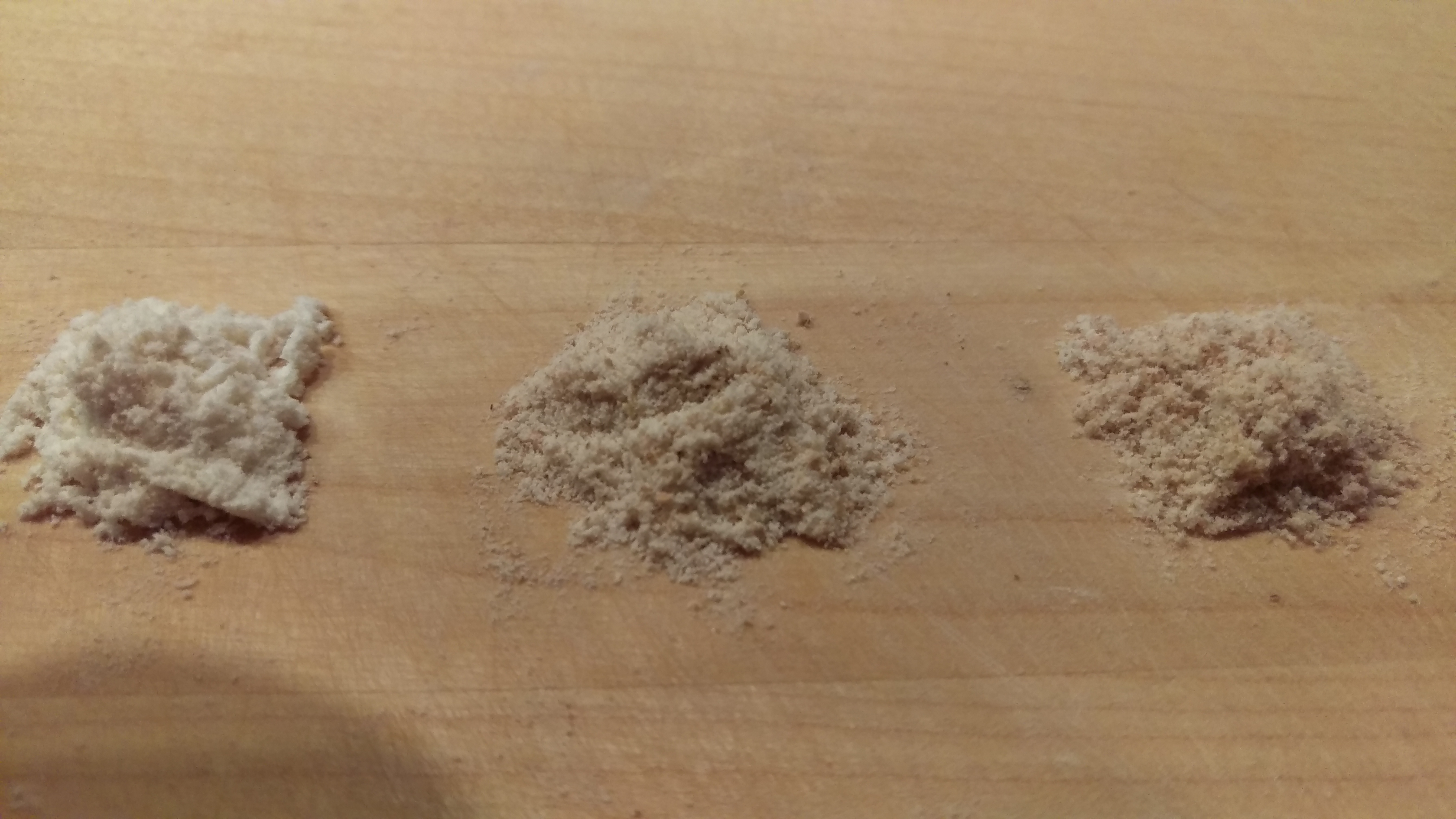
My Sunshine Nugget from Nazko Mfg. & Distributing Co. arrived yesterday. I test ground some barley, which came out with a nice texture, but I haven’t had time to really give it a go yet. Tomorrow for sure though, as it may be the last chance for a couple weeks since my kitchen will be undergoing some major changes.

sunshine nugget barley test #1