super fine mesh sifter

120sifterDespite my appreciation for whole grain (or high extraction almost whole grain), sometimes you really just want some fine white flour. I previously purchased a #50 sifter that I thought would get me close, but it was still only getting me to around a ~75% extraction. The resulting flour was producing more of a whole wheat than white bread. After some research, I realized that I needed to step-up my sifting game. So here it is, an Advantech #120 stainless steel scientific grade sieve. This gets flour particles down to 125 microns (which I will refer to as super fine).

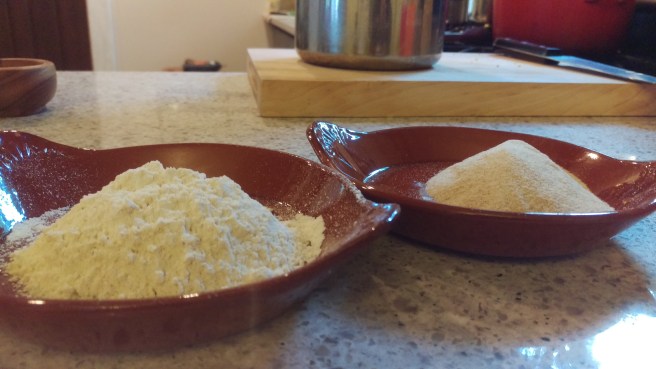
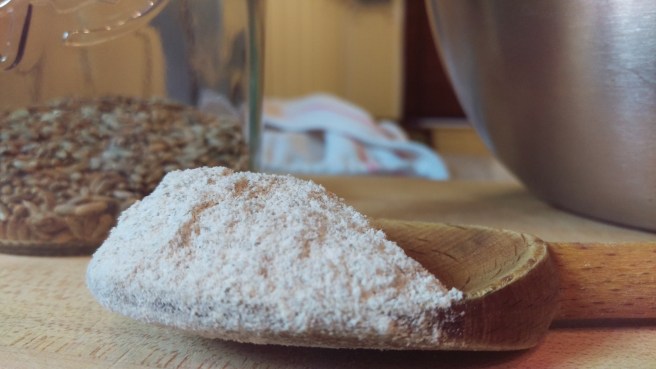
The results are impressive, the picture below is about 100 grams of Turkey Red that had already been through my #50 sifter. It definitely takes some work to get the flour through the mesh and found that rubbing the flour over the mesh by hand was helpful (I read that this is also good method for retaining some of the oils in the white flour).

super fine sifter test #1
super fine flour test #1

The flour is light and powdery, but still retains some of the rich flavor of the Turkey Red grain, although not as much as the whole grain flour or high extraction of course.  The test will be to make a quick bread and see how it holds up (flavor-wise).

Turkey Red: Bonus Milling Video

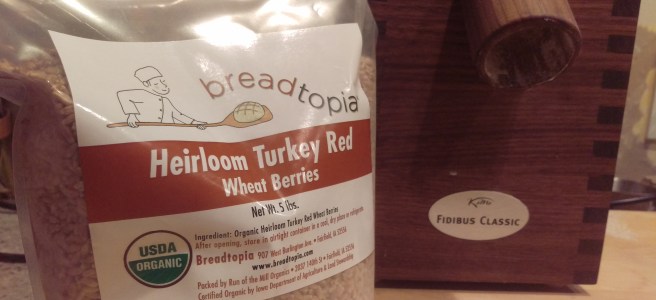
The last weeks have been an expansion of my sourcing of wheat berries, this time to the heartland of America with some Heirloom Turkey Red from Breadtopia. I had not heard of Turkey Red until  a couple weeks ago when I came across an article on Sunrise Flour Mills that spoke highly of the grain for making a nice bread flour. This wheat, introduced to the Great Plains by Mennonites from Russia/Crimea around 1870, used to be widely grown in the Midwest, but fell out of favor after new engineered modern varietals took hold of the wheat industry and public tastes. If you are bored, you should read this article, Turkey Wheat: The Cornerstone of an Empire (a little dramatic of a title though).

These particular Turkey Red berries come from Heartland Mills, although there is no more information about the particular farm. I have my first bread experiment with Turkey Red flour in progress, but thought I would share this short video (my first) of the milling.

For this fairly hard grain, I set the mill at a slightly roughly setting resulting in a fine light meal texture that looked perfect for a long fermented rustic loaf.

The video cuts out a little at the end. IMG_20160130_095639my wife is constantly running out of memory on her phone due to an insane number of baby photos and videos being texted on any given day. I was just about to explain that the sifter is #50 mesh and does a great job of producing a fine flour with more extracted bran than my previous sifter.

Here is a gratuitous photo of baby playing with bags of grain. A future miller maybe.

old school sonoran wheat tortillas

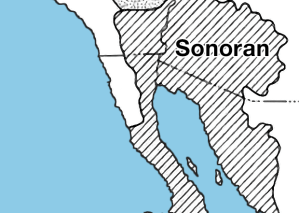
Sometime in the second half of the 17th century, Spanish and Italian missionary colonists introduced wheat to the Sonoran desert region of what is now a large part of Arizona and Northwestern Mexico. Possibly due to Spanish Jewish settlers looking for a kosher alternative to the corn tortilla, the flour tortilla became a culinary staple of the region. NPR has a short story  on why it is that thin flour tortillas become such a hit (rather than the thicker New Mexico style). The publication Edible Baja Arizona also has a great article on the history of Sonoran wheat and efforts to bring local wheat production back to the area. A fascinating example of a lost regional culinary culture that is being revived through local farming and milling of Sonoran white wheat.

Mojave-sonoran_deserts

One of the people helping to revive the local wheat scene down in Arizona is Hayden Flour Mills. I have been following their awesome work over the past year, in part, as a model of something I would like to build up here in Washington.

I figured it was time to actual order up some of their signature White Sonora Wheat and give it a go in making tortillas.

IMG_20160130_171127

I love homemade tortillas and have been getting better and better at whipping them up on short notice. This, however, would actually be my first attempt with fresh milled flour. First, I would say that the White Sonora berries themselves are very attractive (for a wheat berry), with a round, supple appearance. Much more so than the tough hardened look of say winter Red Fife. The flour is soft and fine, with a yellow tint that reminded me of the color of white corn chips. The raw flour by itself is mild and sweet tasting. Definitely not the heartiness of a bread flour, but with more earthy-wheat flavor than a soft white flour.

IMAG0523

For these tortillas I kept the flour whole, but I would not repeat this and would sift off some of the bran in the future (this was my first mistake.) The bran is light and blends into the overall floury endosperm so it was easy to justify leaving it in, but it still seemed to soak up too much water and broke up the formation of nice long gluten chains. As you can tell from the pictures, the dough came out dry. It is hard to correct for under-hydrating dough after it is mixed. I tried a little, but it was too late. The dough still rolled nice and thin while maintaining a good flexible strength, but the edges frayed. The second mistake was using spelt flour (left over from milling the week before) to dust while rolling the tortillas. I should have just milled extra white flour for this, but I was trying to be resourceful.

(See the hazy photos below. I did not realize that there was a sheen of lard over the lens of my camera phone.)

IMAG0526IMAG0527IMAG0529IMAG0531

In the end, the tortillas were tasty, just due to the great flavor of the White Sonora flour, which shone through the poor execution on my part. These were my most “rustic” tortillas in a while. Too dry, my wife added. She asked if I could make them more like the chewy store-bought kind. I might try a batch with a 50 oil/ 50 lard fat ratio. Regardless though, the next batch of Sonoran wheat tortillas will be much better.

triticum aestivum subsp. spelta pizza

Spelt is apparently the source of some controversy. That is, is spelt a subspecies or wheat or a close cousin of wheat. The FDA says it is a wheat and the current genetic-based taxonomy appears to classify it as such. Other than for sciencey types, I would guess the debate is driven by a desire to avoid the bad reputation of wheat in certain nutritionally-minded circles. I don’t think wheat is a bad thing, so it doesn’t bother me one bit to think of spelt as a wheat.

I will admit that I used to scoff at spelt. It seemed that the first generation of anti-wheat fever resulted in everything being made of spelt–spelt tortillas, spelt bread, spelt pasta, spelt everything. (I am happy that times have progressed and now we are starting to see emmer or other heritage wheat varieties getting top billing.) With the exception of spelt pasta, which is and will always be a travesty, I have come around. So I decided to make some spelt pizza.

My spelt berries are branded as Vita Spelt (who are decidedly on the spelt-not-wheat side of the “controversy”). These berries have a heavy bran, which I sifted off to leave a 75% extracted/bolted spelt flour. I have been adding soft white flour to achieve a lighter flour and decided to go to a higher 47% soft white ratio (ultimately a mistake, it should have been a much lower ratio).

Stone ground soft white on the left, spelt on the right (post-extraction). I really need to tile my backsplash–this is getting ridiculous.

boulted flourDough ratios. My goal was 500g of dough to make two 250g pizza crusts, using a high, 70% hydration.

  • Spelt flour–154g (75% extraction)
  • Soft white — 137g (80% extraction)
  • Water  — 200g for 70% hydration
  • Salt –5g
  • Yeast — 2g

After mixing, the dough was ready for some rising and folding. This dough ultimately was left overnight in the fridge. The following day, the dough was left to rise at room temperature, split in two, shaped, wrapped and placed back in the fridge for a couple hours before dinner time. I loosely followed some guidance from Ken Forkish’s Flour Water Salt Yeast on the principles of good pizza dough.

When it came time to actually shape the actual pizza round, it was very apparent that the spelt (even further weakened by too much soft white flour) was not going to hold up well to stretching. I did a couple hand stretches of the dough, but in the end I had to just knuckle it into shape. See here in the cast iron skillet.

cast iron pizza

So, how was the final product. One with zucchini and onion, the other with uncured salami and pickled garlic (one of my new favorite pickles). Sauce was very simple, sauteed garlic in olive oil and a can of pureed tomato, with red peppers flakes and oregano.  Overall, the pizza was fine, really nothing special, but a worthwhile experiment to test the boundaries of spelt. The dough was chewy and flavorful and not too whole-wheaty, but lacking nice crusty airpockets. My wife even ate most of her crust. A huge victory.

Conclusion, spelt can make perfectly acceptable homemade pizza dough if you accept its limitations.
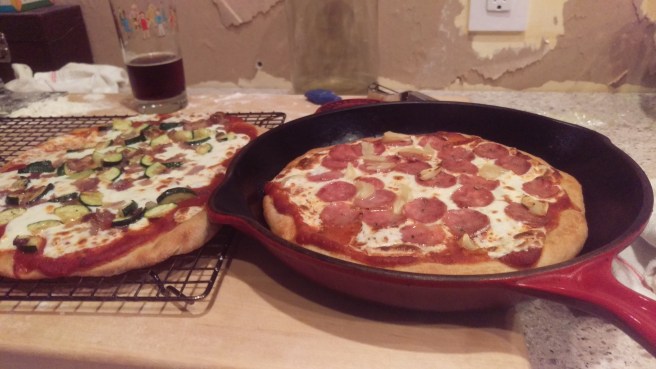
spelt pizzasThe reality is that without a pizza oven (or even a pizza stone in my case), you simply cannot make great pizza at home.  Sometimes though, a less than perfect homemade pizza is what the day calls for.

soft white wheat–comparison

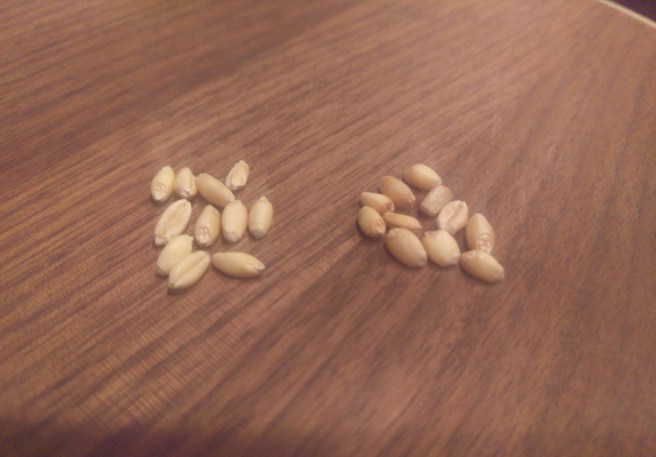
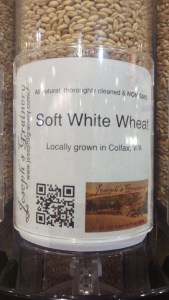
Two different soft white berries for comparison below. An actual baking test to follow. On the right is soft white of unknown origin, purchased from PCC marked simply as USA Organic. On the left is a soft white from Joseph’s Grainery in the Palouse, a huge wheat producing region south of Spokane, Washington (my hometown).

soft white wheats

I have been making pastry dough with the PCC soft white for almost a year now and have no complaints. Notably, however, the soft white from Joseph’s Grainery is lighter and the berries generally look slightly nicer and healthier (just a tad). I have not yet milled or baked with it though.

I had never heard of Joseph’s Grainery, but came across their wheat products while visiting family and stopping by Main Market in Spokane last month.

Joseph's Grainery
bulk whole grain is the way to go

Growing up close to the Palouse, and used to seeing huge fields of grain, I was happy to find a local farm not only growing a couple varieties of wheat (as well as legumes–lentils and chick peas) but milling and selling their flours. I might have to try to visit next time I am on that side of the state and the weather is better.

The next step is to do a side-by-side test for flavor, baking quality and, of course, softness.


rye crispbread with caraway seed

I have delayed writing this post because I am still mad at myself for failing to take good pictures. To be fair to myself, I was preparing for a gathering of new parents and babies (my wife volunteered our house for a Sunday brunch). Between cleaning and trying to prepare some other basic food stuffs (pickled onions and a baked oat dish), I had really been dying to try making some rye crispbread. A great opportunity for testing new breads on unknowing, bedraggled parents.

Of course this starts with milling up some fresh rye flour. I have found I prefer to mill most grains at just a couple clicks above the finest setting when making general rising breads. I have been calling this medium-fine. rye flour

Rye itself has been a favorite supplemental flour for a variety of flatbreads I have been tinkering around with. I find it adds a bit of tanginess. It also has the benefit of high enzymatic activity, which builds a fast growing yeast culture. Rye is kind of an interesting grain, known in fancy science terms as secale cereale, in the triticeae tribe (the category below family/subfamily). Boring stuff, but I kind of like knowing the relationship between the grains in a biological sense, which I may just bore my 10 readers with a little more later. This site, Gramene, is sort of amazing for info on the biology of grasses.

Rye crispbread recipe:

150 grams whole rye flour/ 150 grams high extraction blend of hard red and soft white flour (a sort of custom all-purpose flour I am starting to use more of–I need to do some gluten testing to get some better insight into the effect of different blend ratios).

50 grams of rye/whole-purpose blend poolish, with a dash of active dry yeast.

roughly 50% hydration (I lost track of accurate measurement in adjusting to get the dough to feel right).

about 2 Tablespoons maple syrup.

1 Tablespoon light toasted and coarse ground caraway seed.

3 grams dry yeast

pinch of kosher salt

After a short autolyse, I gave the dough a light knead and left covered overnight in the fridge. The next morning I let the cold dough warm and rise at room temperature and cut it into 50 gram rounds, which I let relax before rolling to the thickness of heavy paper. I then pushed in some more caraway seed and brushed with water before baking for 7 minutes at 450 degrees. The crispbreads aren’t complete dry at that point, so they need about 10 more minutes at 200 degrees after cooling. Sprinkled with Utah Basin Salt.

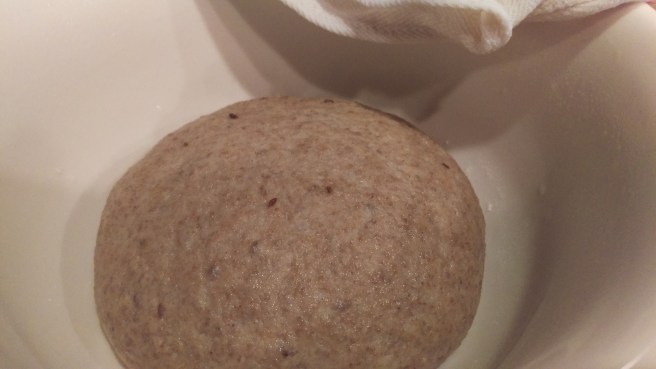
Rising dough pictured below.

rye rising

Sadly, because I simply forgot there are no pictures of the final product, but the crispbreads came out both beautiful and tasty.

baby dj
baby picking out records

Please be appeased by this picture of my daughter picking out a record (only partially staged). It turns out that almost all the parents cancelled due to baby sickness and, more likely, a playoff football game.

More crackers for me.


from a history of emmer

The history of humankind is intertwined with the domestication of grain. It is a search for value in our shared ancient roots and a connection to our food that draws people back to the original wheat varieties, eikhorn and emmer.  Recognition of these “ancient grains” continues to get more and more attention. Last month, the NYTimes had a great article, “Bread is Broken,” that looked at the failure of the modern industrialized grain-to-flour market to produce something worth eating. As the values of modernism and its faith in mass commodification loses it hold on our culinary ethos, looking back is the only way forward. There is nothing new, only reinvention and discovering anew how to eat and live with purpose.

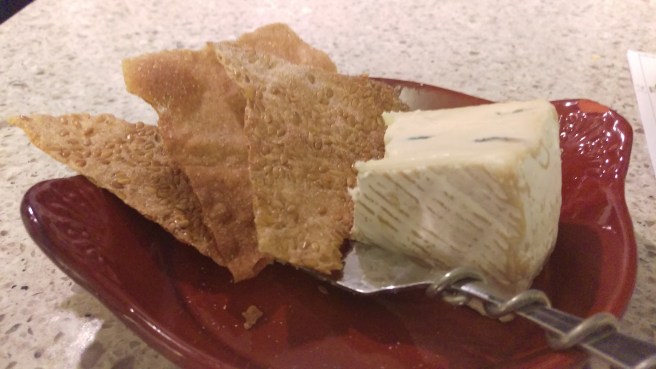
What better way live, than with emmer crispbreads and cheese.

Also known under its Italian name of farro, the berries makes a great grain for risotto-like (farotto) dishes and a compliment to hearty greens. This is how I have typically been using my emmer berry supply.

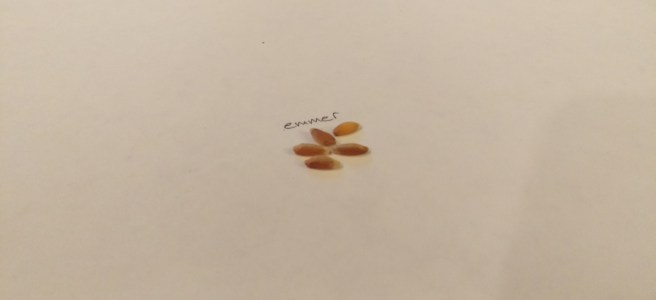
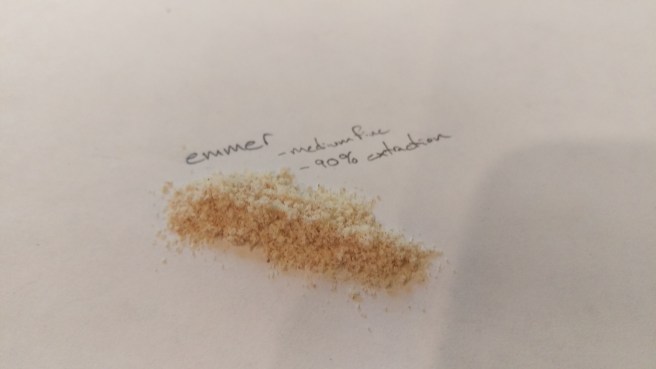
As a flour, emmer mills to a medium soft flour with a yellow/tan earthen tone and a hearty wheat bite.

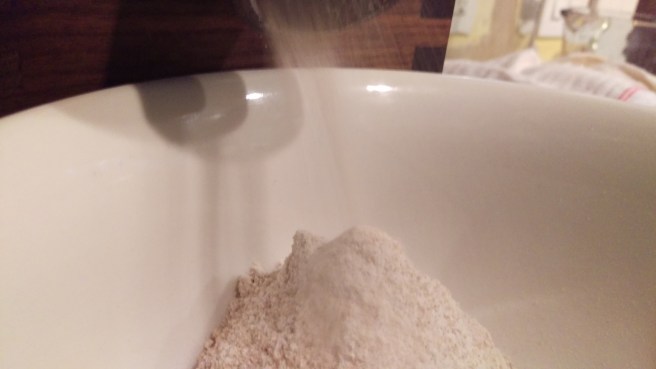
emmer being milledemmer flour

After milling the flour, the crispbread dough was emmer flour, tarragon water (50%), emmer poolish (25%). I made the tarragon water by steeping dry tarragon the day before. I love tarragon and thought it would be a add a subtle herbal flavor to he cracker. (Spoiler: it didn’t work, the wheatiness of emmer overwhelmed any herbal notes.)

I used a fairly standard process for the dough, using a day old emmer poolish and long autolyse. I gave it some generous kneading to help build a solid gluten structure and let it rise overnight in the refrigerator. The gluten in emmer is weak, but for making crispbreads I was concerned less with rising than holding a nice tensity when rolled out.

This slideshow requires JavaScript.

The final product was two batches of nice crispbreads. I pushed flax seeds into the second batch before baking, which added some nice texture and a fancy look. My wife like this version better because it was rolled slightly thinner (on purpose) and also less burnt (on accident, as I left the first batch in a minute or two too long and it got a little toasted). It is always a victory when my wife likes anything I make. She likes a lot of my creations, but the look on her face when something is mediocre is both telling and heartbreaking.

emmer crispbreads
emmer crispbreads and cheese


cooking by hand and the importance of flour

I was talking with a friend that I hadn’t seen in a while and mentioned my new found interest in milling fresh flour, in particular my experiments with fresh pasta. He recommended that I check out Cooking by Hand by Paul Bertolli and sent me a copy. (He also suggested I start making prosciutto in my basement.)

A fascinating read and a departure from the usual cookbook. Rather than a collection of recipes, Bertolli delves deep into ingredients and food making. Flour and pasta making being just one. Not once in all of my various cookbook perusing have I ever encountered anything that truly tried to get to the heart of quality pasta. A good cookbook gives you ideas and inspiration, while making you feel inadequate at the same time. So many things to try and so little time.

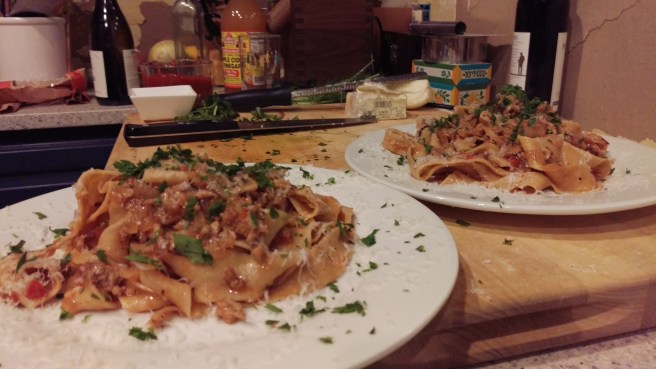
kamut pappardelle (with pork, fennel and mushroom ragu)

As the weather turns, hearty fresh pasta starts to sounds good again. These changes in my sentiments (culinary and otherwise) remind me how close we are to the patterns of the planet and our particular place on it, despite our constructive attempts at distance. Fresh pasta, like bread, is simple in idea, yet varies incredibly on fine differences of texture, water content, and the quality of your ingredients. I have never been satisfied with the fresh pasta I have made. At its worst, it tasted like boiled card stock. At its best, it tasted like fresh pasta.

In all the months I have been playing around with my fresh-milled flour, fresh pasta had not occurred to me as a good use. I blame the weather for this oversight. Looking at the last few Kamut berries sitting around, I thought that rather than bread, this stuff was better for a durum fresh egg pasta.

I decided not to use all Kamut flour, and blended it 50/50 with some Bob’s Red Mill All-Purpose. It always feels a little like cheating when I pull out my commercial flour, but I wanted to really see what the Kamut flour would do to my regular recipe. (Not so much a recipe, really just following a standard process and mixing and kneading until it feels right.)

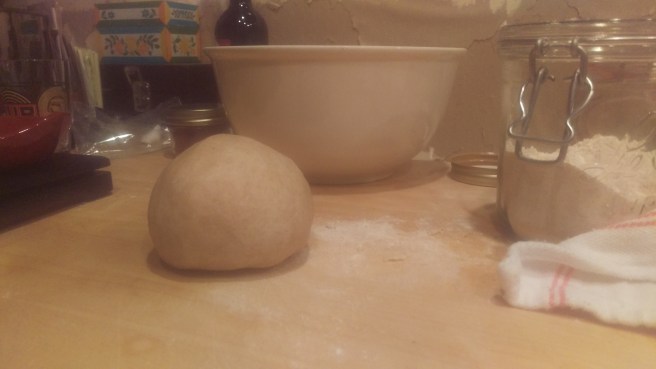
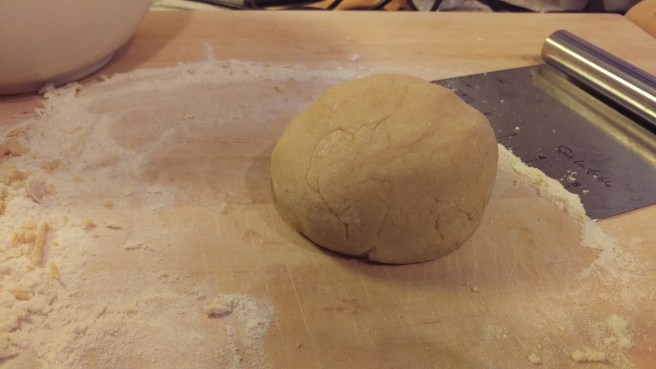
Here is my dough ball. It kind of refused to get nice and smooth, but the feel was right.

dough ball

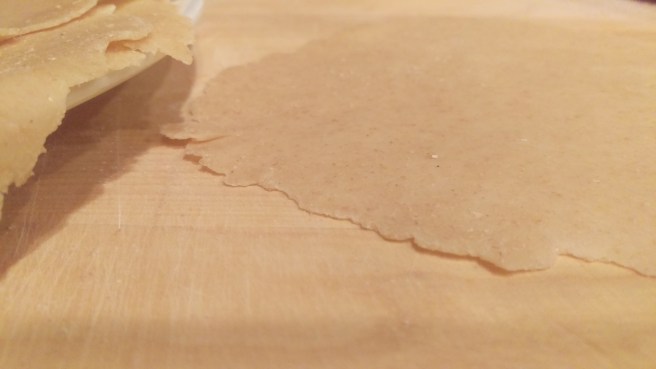
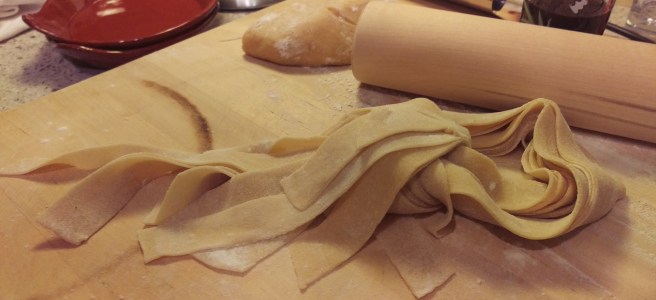
After relaxing the dough, I rolled it out by hand.  (At the end of last winter, I tossed my old cheap roller machine, swearing I would get a fancy new one. Still looking.) The dough held up beautifully, with little sticking or tearing.

laminated dough

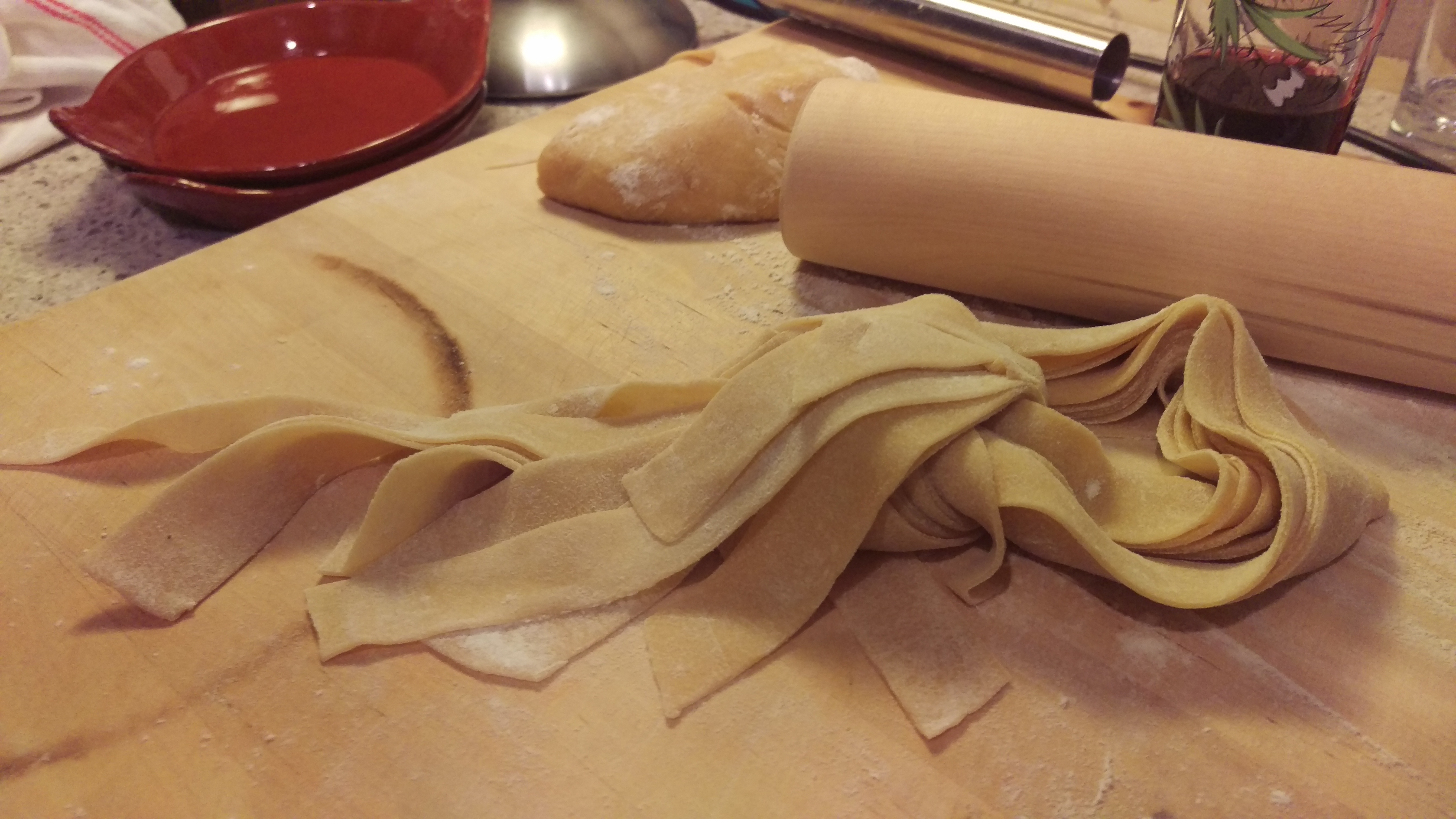
Cut into pappardelle and tied into knots to dry. I ended up refrigerating it overnight, as my wife and I went out. pappardelle knots

Final product for eating: A simple ground pork ragu, with fennel, mushrooms, and a little tomato. The pasta was great. For the first time, I can say that my pasta had tooth and flavor. You could have eaten it with almost nothing on it, like true good pasta. The part still lacking is the quality of the eggs. I need to find somebody raising chickens that hatch eggs with deep yellow-orange yolks, rather than these pale yellow heartless blobs (and these are pricey free-range eggs). Looking at the yolks in David Lebovitz’s photos makes me think America has a chicken egg problem.

Kamut flour has earned my respect back. Time to go buy some more berries and hunker down for a long, damp Seattle winter.

kamut pappardelle with pork, fennel and mushroom ragu

einkorn-two ways

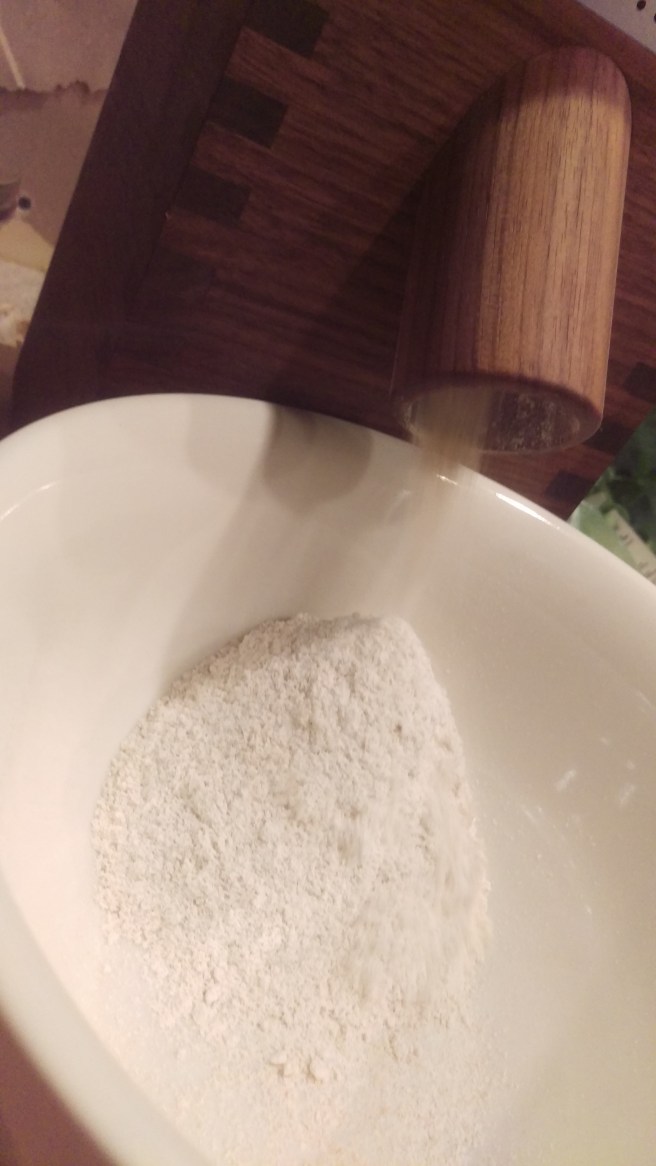
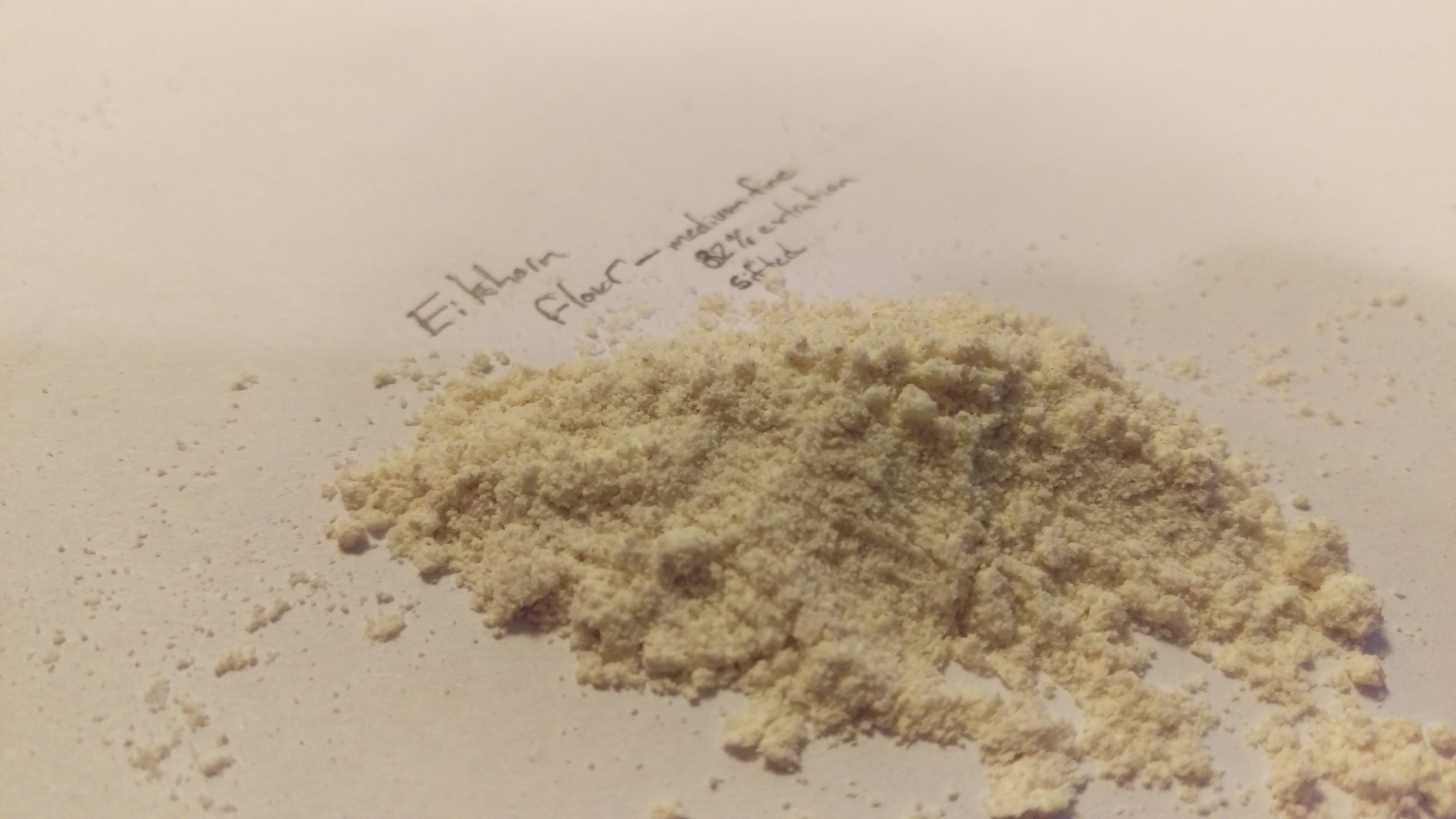
Einkorn doesn’t have the current buzz of Kamut®, a grain that carries its own trademark. It doesn’t even have the modest social cachet of its better known farro cousins–emmer or spelt. Time for a little respect. The small dark berries mill to a fine soft flour with a pleasant sweet nutty aroma.

Medium fine, whole einkorn flour:

IMAG0347

Sifted-82% extraction:

IMAG0348

The plan for this einkorn flour was flatbread. (I am taking a break from full rising breads for a moment.). I haven’t tried, but have heard that einkorn doesn’t make good bread on its own anyway. Again, I am back to using commercial yeast, but try to supplement this with a 1-2 day old poolish to add a little more mature yeast flavor. Alas, this flatbread had no pre-ferment as I once again neglected my flour in favor of child-rearing.

I have no pictures of the dough process. There really wasn’t anything photo worthy. My notebook is downstairs, but I believe it ended at about a 60% hydration ratio.

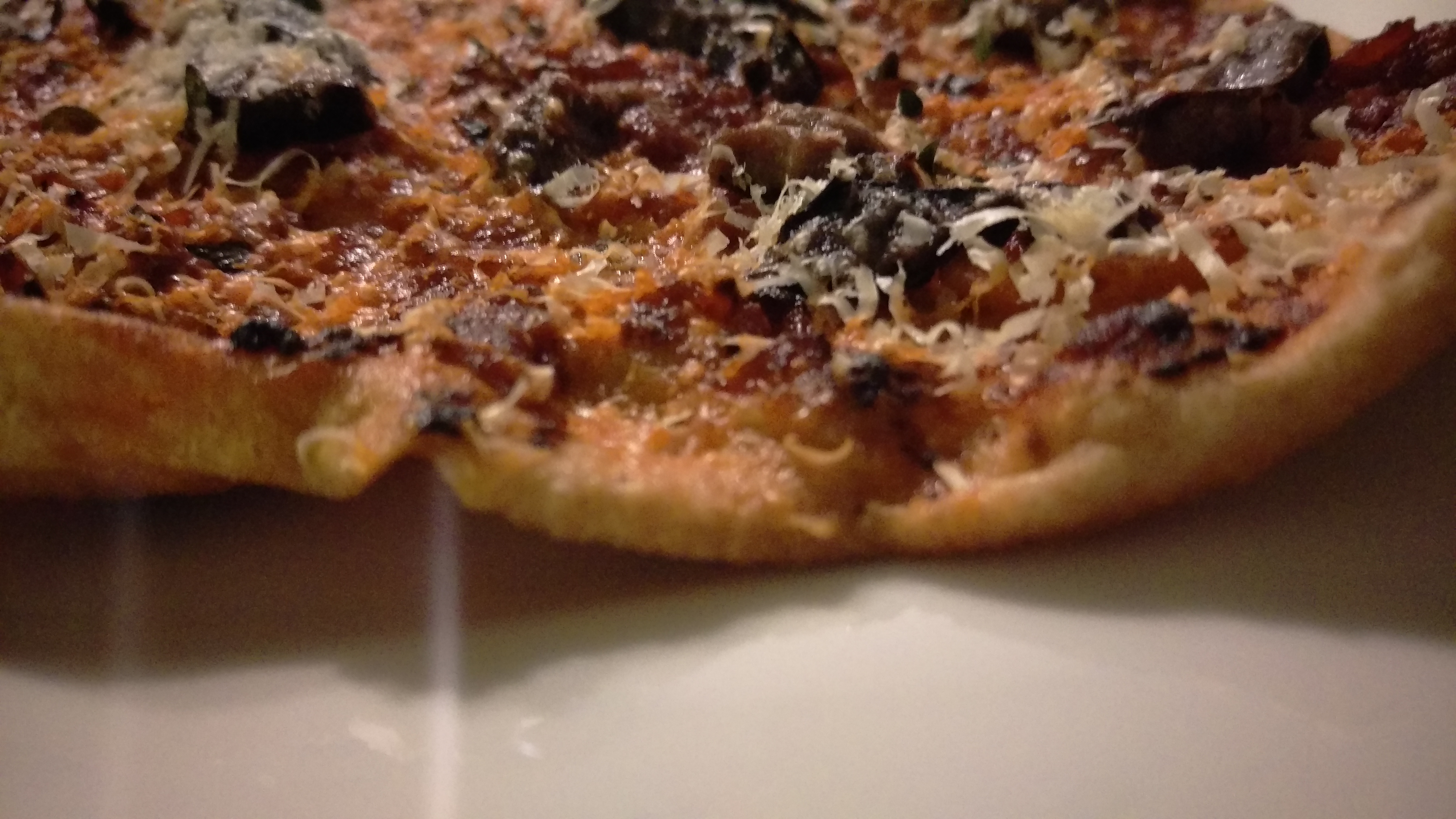
Flatbread topping was a very quick tomato spread of olive oil, garlic, vodka, and tomato paste. Smashed Sicilian olives and grated parmigiano regiginano added with a quick flash under the broiler. A California EV olive oil drizzled on top after cooking.

Einkorn flatbread number #1 was a success (at least so says my wife). She wasn’t as crazy about #2, same flatbread, although cooked in a hot oven rather than on a cast iron skillet, with a coriander bechamel sauce, shredded chicken and diced onion and fresh coriander (aka cilantro). My wife still liked the crust, but thought my white sauce with white chicken was boring. It was. No pictures of that final product, but it was late and my wife and I were hungry.

flatbread for eating
einkorn flatbread, thin crust cooked on a cast iron skillet