
It took a dish of potato gnocchi and braised oxtail to make me want to create and write about basic flour. For the fourth meeting of a cookbook club, the host choose Tasting Rome. After a bit of neglect, I thought this was the time to dust off the mill and make some flour. There was no need for anything other than an “all-purpose” flour for my chosen recipe of coda alla vaccinara con gnocchi di patate. This made me think about the value of fresh-milled flour for these secondary uses. Unlike when used in fresh pasta or bread, is it worth it here? I didn’t run a side-by-side comparison for these gnocchi, but I think that any time an ingredient adds to a dish, rather than just take up space (or supply needed gluten), it brings out a more complete flavor and makes food that sits better on the palate.
What I decided to go with was just a simple flour from Red Fife, a versatile and wheaty wheat. Either emmer or einkorn may have been better for a more rustic old-world flavor, but my granary has been depleted from neglect and didn’t have any in stock. Really though, I wanted to just make a standard basic flour. Potato gnocchi is about texture and weight, not flour. However, I think that flesh milled and bolted flour has a place even when flour is not the highlighted ingredient.
With extra for dusting and storage, I needed just a bit over 1 1/2 cups (roughly 180 grams) of flour for this recipe. Working backwards from previous extraction ratios, I started with 560 grams of Red Fife berries.
Making a fine flour results in a lot of by-product. Pictured below is the bran, everything that won’t pass through a #40 mesh sieve, and the middlings, the rest that doesn’t pass through a #80 mesh sieve. I find that #80 mesh is the minimum size screen for a true fine flour.
This basic fine red fife flour is a 33% extraction (although I was a little inefficient and milled a click coarser than my normal setting when making fine flour).
 Fine fresh-milled flour has a rich white color and a soft vegatal flavor. It doesn’t taste like much compared to a fresh ripe tomato, but it tastes like actual food compare to commercial flour.
To get back to flour, I need to get back to the basics.
Because you can really only take so many pictures of flour, here are some cooking photos. Braised anything makes for great pictures. I have never made potato gnocchi before and was worried about creating dense gummy little balls, but they ended up pretty good, light and airy. The potatoes could have used a couple more minutes, as they were just a touch under-cooked. The flour didn’t shine though, but I believe it helped make them taste rich and complete even as a barely dressed dumpling (which some of the kids at the party wanted).
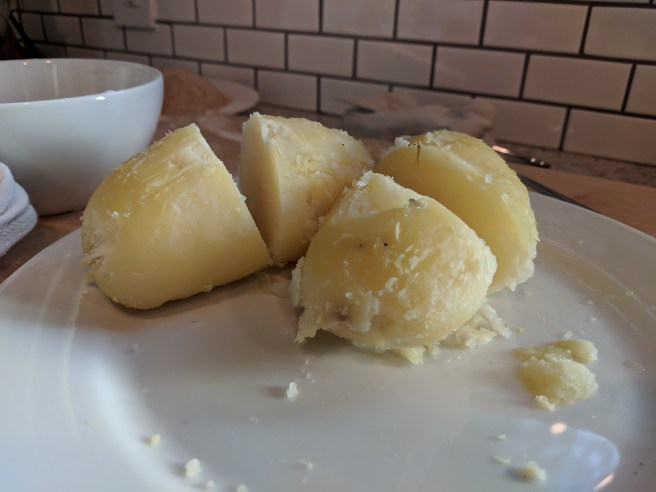
The basic recipe (from the cookbook) was 1 lb of dry floury-type potatoes (in this case russets), 1 1/3 cups flour, a pinch of sea salt and fresh ground nutmeg. Just like for fresh pasta, form a well with the grated potatoes, add the flour/salt/nutmeg mixture to the well, and then knead until it is all just incorporated together and forms a soft dough.
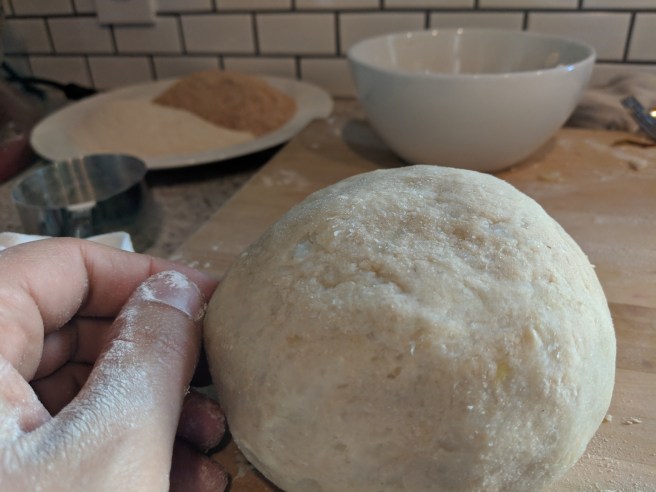
I wish I had taken a photo, but my daughter helped cut up the gnocchi. Despite her later resistance to eating anything (playing was more fun), she loves to be part of the cooking process. We cut roughly 1/2 inch squares off the rolled out potato dough snake, keeping the dumplings on the larger size to hold up better when mixed with a thick braised oxtail stew.

The recipe for the braised oxtail is simple and beautiful. I deviated in minor bits from the cookbook (part of the spirit of the club is to not deviate too far), mainly because I wanted to create the ragu straightaway (skipping the eating off the bone standalone dish), as the cookbook suggested is good as leftovers when mixed with the potato gnocchi. It was.


 whole-purpose.com
This looks delicious! I love gnocchi, and oxtails. When I was a kid butchers would literally give oxtails away. I can’t believe how expensive they are now.
LikeLike