
Without really meaning to, I took a break from posting about my adventures in home flour milling. I wish there were some interesting or meaningful reason, but it was just being busy. The whole-purpose mill didn’t shutdown over the past six months though, the milling and sifting continued (albeit at a more infrequent pace).
Over in Spokane for the holidays, I picked up some Kamut berries to go along with my Christmas present of a KitchenAid pasta rolling attachment. I have yet to find a source of true durum wheat berries and I find Kamut a good alternative for durum-based pastas. Kamut is a brand name of khorasan wheat, a cousin or ancestor of durum.
Kamut is a tough berry that is about twice as large as your normal wheat berry. For grinding a semolina, I will do a coarse grind first to break it up. Making semolina is more of a staged process than any of the other flours that I make.
After the first rough milling: 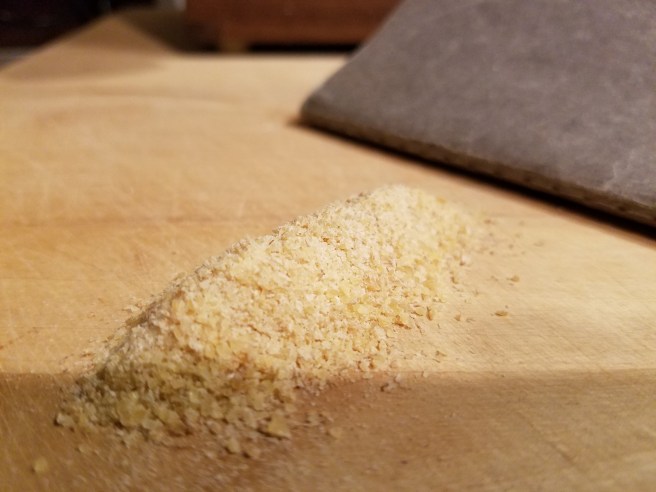
I sifted out the fine semolina and flour that resulted from the first milling and sent the rest back through at a finer grind setting (a course-fine grind). The final product broke down into three grades after sifting, with 170g of bran/germ extracted:
- 70g of b grade semolina (passed through a general medium fine mesh sieve)
- 70g of fine semolina (passed trough a #50 mesh sieve, but wouldn’t make it through an #80 mesh)
- 45g of fine Kamut flour (passed through a #80 mesh). #80 mesh is the the lowest sieve that I consider makes a fine flour. I might try a #70 though to see if that changes much while enabling me to keep a little more flour.
Pictured below, from left to right in order of fineness.
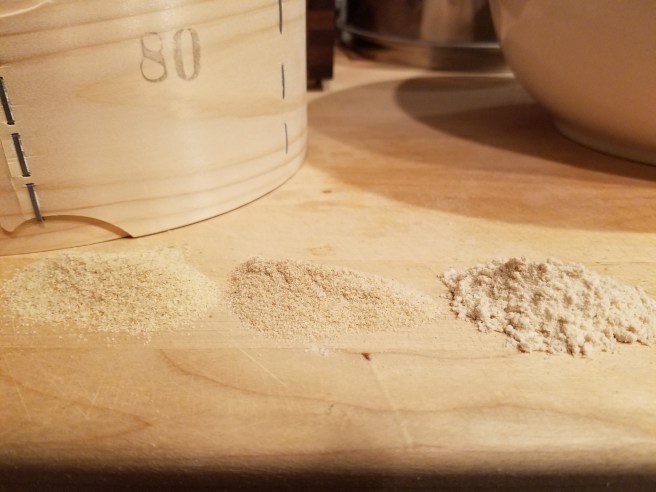
The fine semolina was a really nice consistent grind with a great rich yellow color. 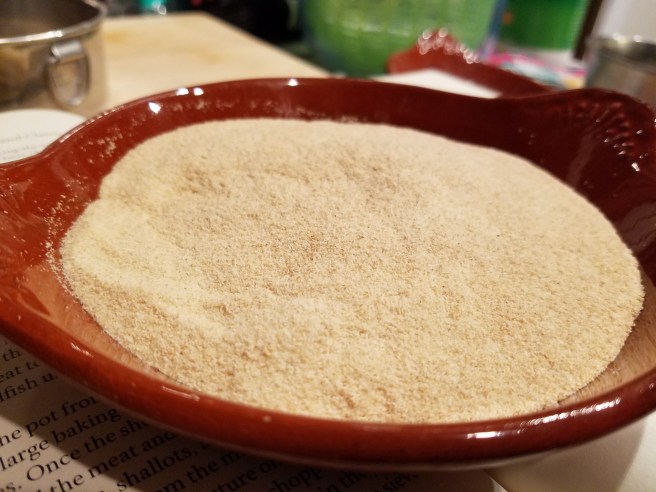
For making pasta, however, the separation of the grades was just temporary for testing purposes. The final blend was 200g of semolina and flour, a mix of all the grades listed above, plus a touch of the bran/germ extract. I added 120g of cool water, mixed by hand, and kneaded into a firm smooth ball with good spring-back. The dough was then wrapped and left to rest.
Dinner was poorly planned, as usual for me, so the dough ball did not rest long enough. It should have been 1-2 hours, but it got only 45 mins, which did result in the dough feeling unfinished and not staying as smooth as it should have.
Given the short time of resting for the dough, using the KitchenAid to roll out the dough didn’t seem wise, so I decided to make orecchiette instead. Orecchiette is supposed to a rustic homemade pasta anyway, so it fits for the occasion. Orecchiette also has the benefit of being made with a blend of semolina and flour.


After resting the dough (for not long enough), I rolled it out and made about 10 dough snakes in classic elementary school fashion. I used a butter knife to cut off off-set square pieces and roll them into ovals and turn them inside-out. It is a little bit of a slow process, but you have to just keep a steady rhythm and not get overly concerned about exact consistency (my wife would probably have killed me if I delayed dinner any longer as well).
I thought my rolling and turning work turned out OK for a orecchiette novice. I watched this video of Nonna Romana as my guide.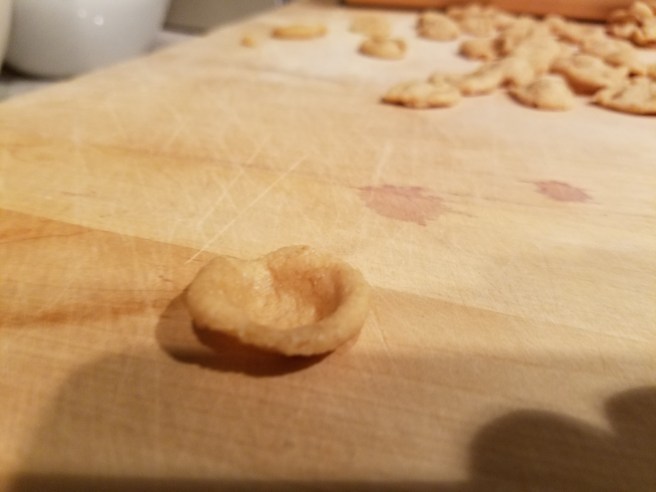
My daughter was eyeing the pasta as I started to plate, she does love her pasta.
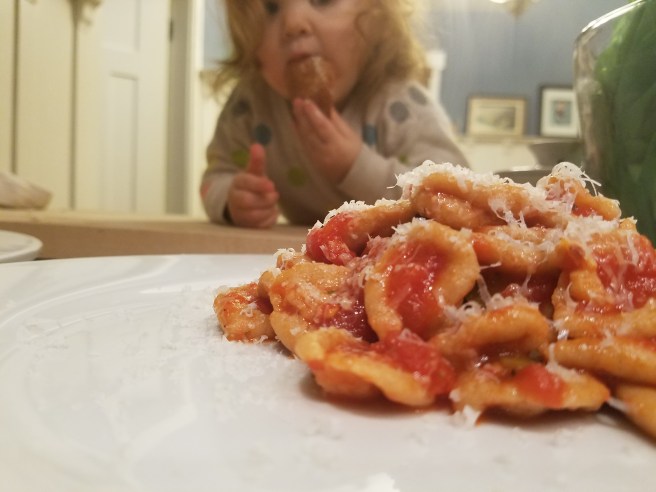
The pasta turned out pretty solid and enjoyable. My wife liked the wheatiness of the Kamut that came through in the pasta. That is the best part about using fresh flour, getting the taste of actual wheat in your food.
The sauce was a very simple, with garlic sauteed in oil olive, crushed San Marzano tomatoes, chopped olives and a touch of dried herbs (marjoram and thyme). Grated parmigiano-reggiano on top. Credit to my wife who actually made the sauce.
 whole-purpose.com