
I have delayed writing this post because I am still mad at myself for failing to take good pictures. To be fair to myself, I was preparing for a gathering of new parents and babies (my wife volunteered our house for a Sunday brunch). Between cleaning and trying to prepare some other basic food stuffs (pickled onions and a baked oat dish), I had really been dying to try making some rye crispbread. A great opportunity for testing new breads on unknowing, bedraggled parents.
Of course this starts with milling up some fresh rye flour. I have found I prefer to mill most grains at just a couple clicks above the finest setting when making general rising breads. I have been calling this medium-fine. 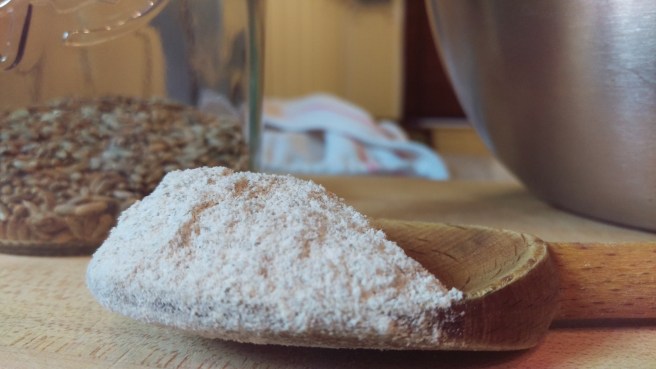
Rye itself has been a favorite supplemental flour for a variety of flatbreads I have been tinkering around with. I find it adds a bit of tanginess. It also has the benefit of high enzymatic activity, which builds a fast growing yeast culture. Rye is kind of an interesting grain, known in fancy science terms as secale cereale, in the triticeae tribe (the category below family/sub–family). Boring stuff, but I kind of like knowing the relationship between the grains in a biological sense, which I may just bore my 10 readers with a little more later. This site, Gramene, is sort of amazing for info on the biology of grasses.
Rye crispbread recipe:
150 grams whole rye flour/ 150 grams high extraction blend of hard red and soft white flour (a sort of custom all-purpose flour I am starting to use more of–I need to do some gluten testing to get some better insight into the effect of different blend ratios).
50 grams of rye/whole-purpose blend poolish, with a dash of active dry yeast.
roughly 50% hydration (I lost track of accurate measurement in adjusting to get the dough to feel right).
about 2 Tablespoons maple syrup.
1 Tablespoon light toasted and coarse ground caraway seed.
3 grams dry yeast
pinch of kosher salt
After a short autolyse, I gave the dough a light knead and left covered overnight in the fridge. The next morning I let the cold dough warm and rise at room temperature and cut it into 50 gram rounds, which I let relax before rolling to the thickness of heavy paper. I then pushed in some more caraway seed and brushed with water before baking for 7 minutes at 450 degrees. The crispbreads aren’t complete dry at that point, so they need about 10 more minutes at 200 degrees after cooling. Sprinkled with Utah Basin Salt.
Rising dough pictured below.
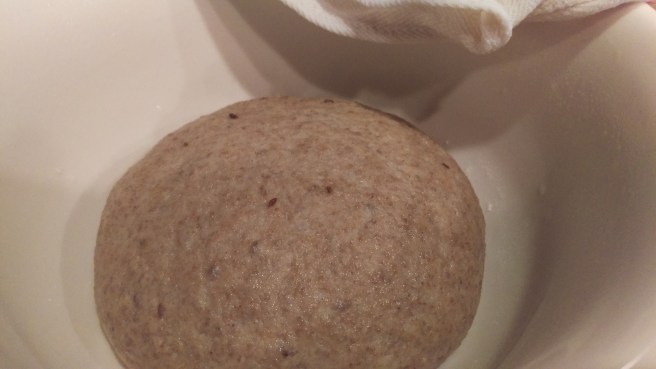
Sadly, because I simply forgot there are no pictures of the final product, but the crispbreads came out both beautiful and tasty.
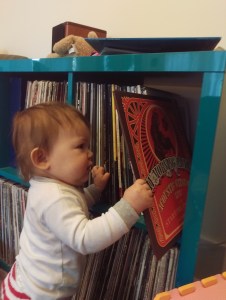
Please be appeased by this picture of my daughter picking out a record (only partially staged). It turns out that almost all the parents cancelled due to baby sickness and, more likely, a playoff football game.
More crackers for me.
 whole-purpose.com